Picking an e-commerce development partner is one of those decisions that quietly shapes everything downstream, from how fast your store loads to how easily you can add a new payment method next year. Get it right, and your platform grows with you for a decade. Get it wrong, and you’re stuck paying someone else to untangle custom code nobody documented.
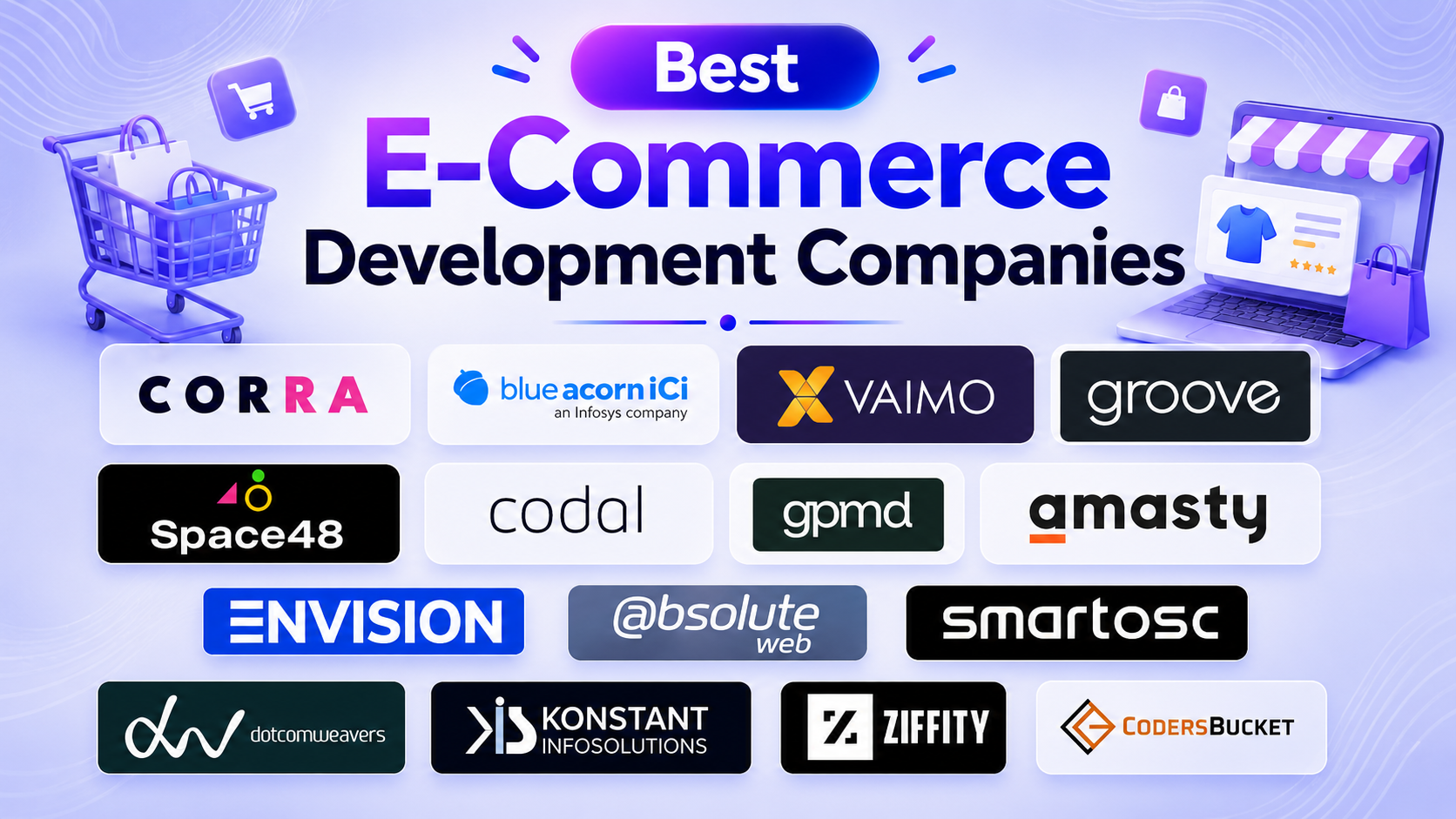
This guide covers 15 agencies worth knowing about, spanning Shopify, Adobe Commerce (Magento), BigCommerce, and fully custom-built platforms.
They range from enterprise replatforming specialists to fast-moving DTC experts. To help you find the right fit, we’ve grouped them by their core strengths rather than listing them randomly.
A quick note before diving in. There’s no single official “best of” ranking in this space. Clutch, G2, and DesignRush each score differently, and plenty of agencies publish their own lists too.
What follows is built from platform expertise, client track record, and industry reputation rather than one source of truth. Treat it as a well-researched starting point, not gospel, and confirm current pricing and availability directly with each company before signing anything.
Why Choosing the Right E-Commerce Development Partner Matters
The agency you pick doesn’t just build your store, it shapes how much that store costs you to run for years afterward. A rushed build with shortcuts baked in tends to work fine for the first six months, then starts costing more in fixes than it would have cost to build properly the first time.
Platform choice adds another layer. Shopify, Adobe Commerce, and BigCommerce all solve the same basic problem in different ways, and an agency that specializes in one platform will make different architectural decisions than one specializing in another.
That’s part of why this list is organized by specialty rather than a flat ranking, since “best” really depends on what you’re trying to build.
There’s also the question of what happens after launch. A site that works perfectly on day one but has no plan for ongoing maintenance, security patches, or seasonal traffic spikes is a liability waiting to surface at the worst possible time, usually during a big sale event.
The agencies below were chosen partly on how seriously they treat that post-launch relationship, not just the initial build.
And then there’s the cost of switching later. Migrating from one agency to another, or from one platform to another, almost always costs more than doing the research upfront to pick well the first time.
Product data has to move, integrations have to be rebuilt, and someone has to relearn a codebase they didn’t write. None of that is impossible, but it’s the kind of expense that’s far easier to avoid than to fix.
Shopify vs Adobe Commerce vs BigCommerce: Which Platform Fits Your Business?
Before comparing agencies, it helps to understand roughly where each major platform fits, since that context explains why some companies on this list specialize the way they do.
Shopify, particularly Shopify Plus, tends to suit brands that want a faster path to launch with less backend complexity.
It handles hosting, security, and updates on Shopify’s side, which frees an agency to focus on storefront design and app integrations rather than server management. That’s part of why agencies like Groove Commerce and Space 48 lean into Shopify Plus for fast-moving DTC brands.
Adobe Commerce, still widely known by its older name Magento, gives businesses more control over backend logic and customization, which suits companies with complex B2B pricing rules, large catalogs, or highly specific workflows.
Agencies such as Amasty and Envision eCommerce specialize in Adobe Commerce precisely because that added adaptability demands greater commitment to infrastructure management and ongoing maintenance.
BigCommerce sits somewhere in between, offering more built-in flexibility than Shopify while keeping more of the infrastructure managed than Adobe Commerce does. It’s a common choice for mid-market retailers who’ve outgrown Shopify’s limits but don’t need the full complexity of a Magento build.
None of these platforms is universally “better.” The right one depends on catalog size, technical requirements, and how much control your team actually wants over the backend versus how much you’d rather hand off entirely.
How We Evaluated These Companies
Each agency on this list was assessed against a consistent set of factors rather than picked based on marketing copy alone. Here’s what actually went into the evaluation.
- Platform certifications. Credentials like Adobe Solution Partner tiers or Shopify Plus partner status carried real weight, since those require agencies to meet minimum standards set by the platform itself, not just self-reported claims.
- Client history and public reviews. Feedback on sites like Clutch and G2 factored in directly, since that kind of third-party record is harder to dress up than an agency’s own case studies page.
- Longevity in the space. How long each company has operated mattered too. Longevity isn’t everything, but an agency that’s survived multiple platform migrations and algorithm changes over a decade has usually learned lessons the hard way that a newer shop hasn’t yet.
- Specialization over breadth. A company that does everything from SEO to app development to e-commerce tends to be less sharp at e-commerce specifically than one that treats it as a core focus. That’s reflected in how each entry below is framed around what the company does best, not everything it claims to offer.
- Transparency about limitations. Agencies that clearly state which platforms they specialize in, rather than claiming expertise across every possible technology, tend to deliver more predictable results.
Taken together, these factors say more about how a company will actually perform on a real project than any single glowing testimonial could. That’s the lens the rest of this list runs through.
Quick Comparison at a Glance
| Company | Best For | Primary Platforms |
| CodersBucket | Shopify development with an offshore team | Shopify |
| Corra | Headless and composable commerce | Adobe Commerce, Shopify Plus, commercetools |
| Blue Acorn iCi | Enterprise Adobe Commerce | Adobe Commerce |
| Vaimo | Global multi-region rollouts | Adobe Commerce |
| Groove Commerce | Shopify Plus with marketing support | Shopify Plus, BigCommerce |
| Space 48 | Headless retail storefronts | Shopify Plus, BigCommerce |
| Codal | UX-led design and development | Shopify Plus, BigCommerce |
| GPMD | UK-based Shopify and Adobe work | Shopify Plus, Adobe Commerce |
| Amasty | Magento and Adobe Commerce extensions | Magento, Adobe Commerce |
| Envision eCommerce | End-to-end Magento builds and support | Magento, Adobe Commerce |
| Absolute Web | Fast-turnaround custom builds | Adobe Commerce, Shopify Plus, BigCommerce |
| SmartOSC | Enterprise systems integration | Adobe Commerce, SAP Commerce, Salesforce |
| DotcomWeavers | Small and mid-sized businesses | Shopify, Magento |
| Konstant Infosolutions | Budget-conscious, multi-platform work | Shopify, Magento, WooCommerce |
| Ziffity Solutions | Omnichannel retail integration | Adobe Commerce, Shopify, Salesforce |
Best Overall Pick
1. CodersBucket: Best for Shopify Development and Offshore Engineering Teams
CodersBucket is a Bangladesh-based software development company with 14+ years of engineering experience and 180+ projects delivered across SaaS, mobile, and e-commerce.
Unlike agencies that treat e-commerce as one service among dozens, CodersBucket pairs Shopify development with a dedicated offshore team model, so you get consistent engineers rather than a rotating cast of contractors.
Stores constructed by one team and handed off to another frequently suffer from a gradual buildup of minor discrepancies. Because of this, maintaining team continuity is far more crucial than many buyers anticipate.
Notable:
- 5-star rating on Clutch from clients across the US, Australia, and beyond
- Strong fit for startups and agencies needing an extension of their own team, not just a vendor
- Combines Shopify development with broader custom software and AI-powered application work
- Handles both greenfield builds and ongoing support, so the relationship doesn’t end at launch
Best Enterprise-Grade E-Commerce Agencies
These three firms are built for large, complex implementations, the kind involving multiple regions, high SKU counts, or integrations with existing enterprise systems like ERP and CRM platforms. They tend to come with larger teams, longer engagement timelines, and pricing to match.
2. Corra: Best for Headless and Composable Commerce
Corra has spent more than two decades building storefronts for fashion, beauty, and lifestyle brands, and it now operates as part of Publicis Sapient following a 2023 acquisition.
The agency leans heavily into headless and composable architecture, which suits brands that need speed and flexibility across multiple sales channels rather than a single, rigid storefront.
Notable:
- Deep experience with Adobe Commerce, Shopify Plus, and commercetools
- Backed by Publicis Sapient’s global scale since the 2023 acquisition
- Best suited to mid-market and enterprise retail brands with complex catalogs
3. Blue Acorn iCi: Best for Enterprise Adobe Commerce Implementations
Blue Acorn iCi formed in 2019 when Blue Acorn merged with iCiDIGITAL, and the combined firm is now part of Infosys.
With this level of enterprise backing, the firm possesses substantial engineering resources capable of supporting large-scale, multi-year Adobe Commerce projects.
These projects often involve complex product catalog structures or custom configurators that smaller agencies lack the scale to deliver effectively.
Notable:
- Platinum Partner status in the Adobe Solution Partner Program
- Over 400 engineers, data scientists, and strategists on staff
- A natural fit for Fortune 1000 brands running complex product configurators or catalogs
4. Vaimo: Best for Global Adobe Commerce Rollouts
Vaimo has been building digital commerce experiences since 2008, and it’s grown into one of the more geographically spread Adobe Commerce partners, with teams across Europe, Asia, and the Americas. That spread matters for brands launching in several regions at once and needing local commerce knowledge in each one, rather than a single team trying to understand every market from a distance.
Notable:
- Adobe named Vaimo Digital Experience Solution Partner of the Year for EMEA in 2020
- Focuses on B2B and B2C commerce at scale, not just single-market storefronts
- Good option for brands managing multi-region rollouts with local nuance
Best Shopify Plus and BigCommerce Specialists
If your brand runs, or plans to run, on Shopify Plus or BigCommerce, these four agencies specialize in exactly that ecosystem. They tend to move faster than enterprise-focused firms and often pair development work with design or marketing services.
5. Groove Commerce: Best for Shopify Plus Paired with Marketing
Groove Commerce blends Shopify Plus and BigCommerce development with digital marketing and CRM integration, which suits growing direct-to-consumer brands that need their site and their marketing stack talking to each other from day one, not bolted together later after launch.
Notable:
- Strong reputation with growth-stage DTC brands rather than pure enterprise accounts
- Combines platform development with ongoing marketing support under one roof
- Worth a look if your team wants fewer vendors to coordinate
6. Space 48: Best for Headless Shopify Plus and BigCommerce Builds
Space 48 is a UK-based agency with Shopify Plus and BigCommerce Elite partner status, and it’s built a focus around performance-driven, headless storefronts for retail brands that care about page speed and conversion rate as much as visual design.
Notable:
- Elite-tier partner status with both Shopify Plus and BigCommerce
- Focused specifically on retail brands rather than a broad industry mix
- Strong option for UK and European brands wanting a local team
7. Codal: Best for UX-Led Headless Commerce
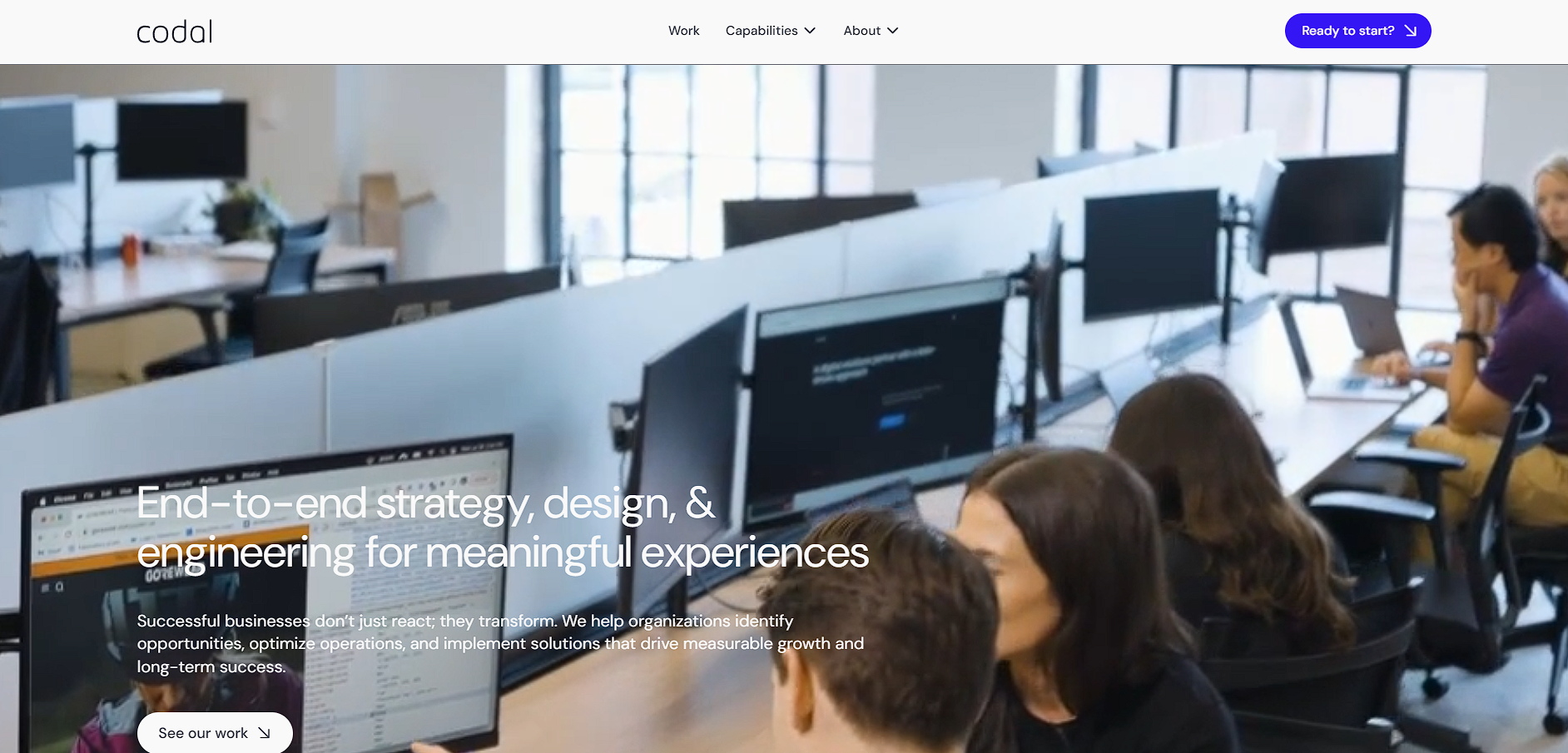
Codal is a Chicago-based digital agency that puts UX design at the center of its process, then builds headless commerce experiences on Shopify Plus or BigCommerce around that design work.
That order of operations tends to produce storefronts that feel considered rather than assembled from a template, since the visual and functional decisions get made together instead of one following the other as an afterthought.
Notable:
- Design-first approach rather than development-first
- Focused on mid-market brands rather than large enterprise accounts
- Strong pick if visual polish and UX are the top priority
8. GPMD: Best for UK-Based Shopify Plus and Adobe Projects
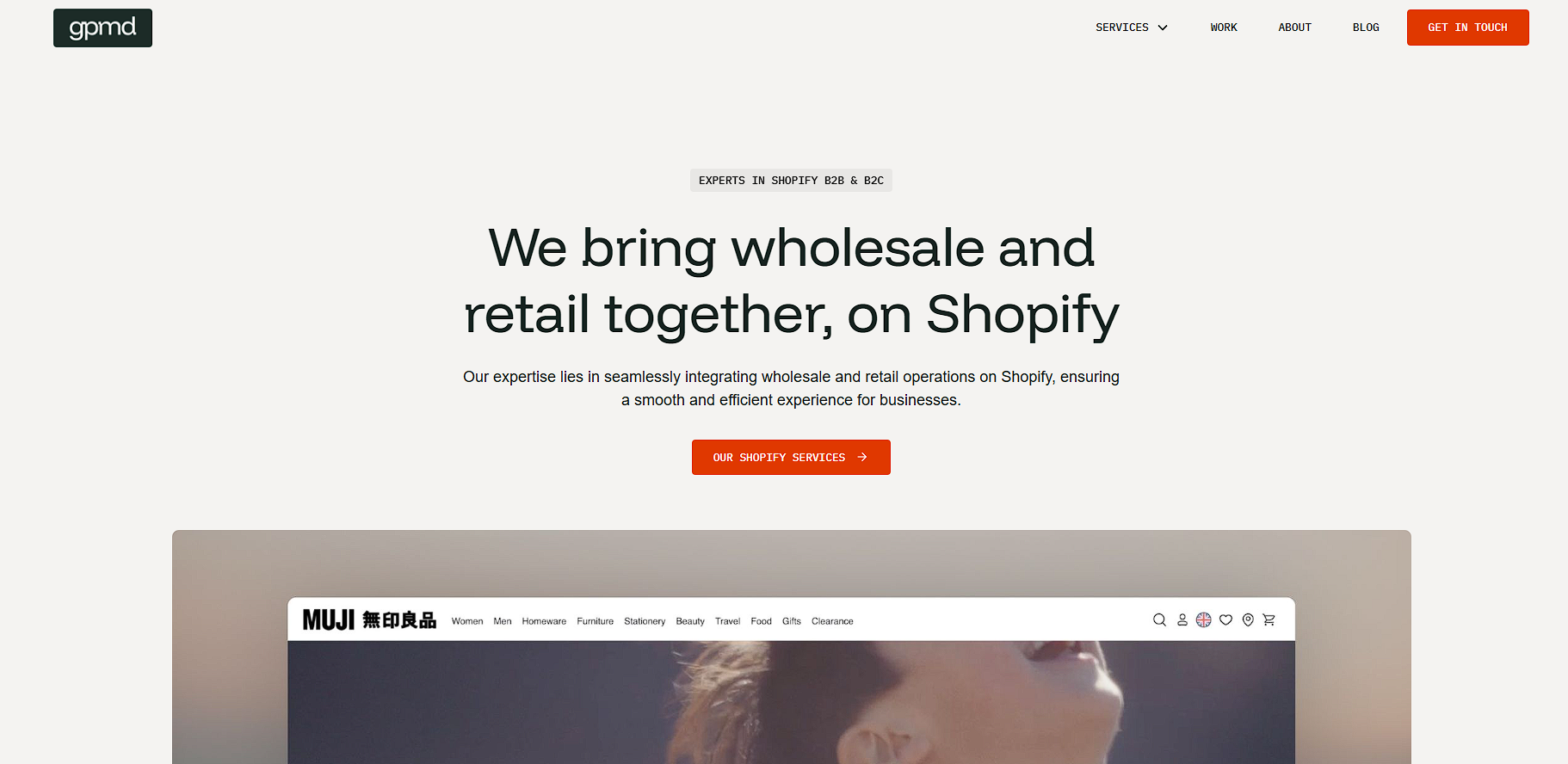
GPMD is a UK agency working across Shopify Plus and Adobe Commerce, with a client base that includes established retail brands looking for a local team that understands UK compliance and market expectations without the overhead of a large multinational agency.
Notable:
- UK-based team, useful for brands wanting local time zone overlap
- Works across both Shopify Plus and Adobe Commerce
- A middle ground between boutique agencies and the largest global firms
Best Magento and Adobe Commerce Specialists
Magento, now branded Adobe Commerce, still powers a large share of mid-market and enterprise stores. These two companies focus specifically on that ecosystem rather than spreading across every platform.
9. Amasty: Best for Magento and Adobe Commerce Extensions
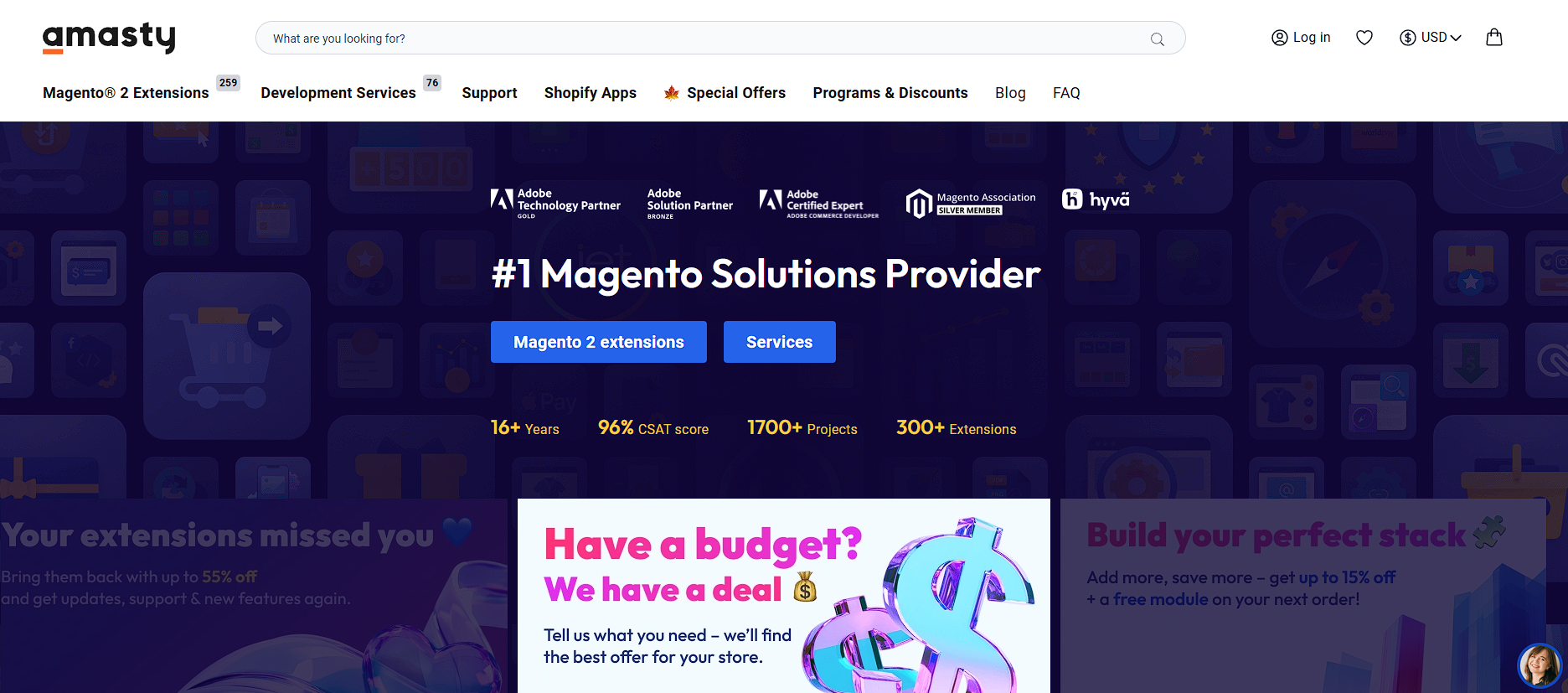
Amasty built its name through a large catalog of Magento extensions before expanding into custom Magento and Adobe Commerce development. If your project lives specifically in the Magento ecosystem, Amasty’s depth there is hard to match, since the team has effectively been living inside that platform’s code for years rather than treating it as one option among several.
Notable:
- Known first for its extension marketplace, now also offering custom development
- Deep, specialized knowledge of Magento and Adobe Commerce specifically
- A strong pick when the project is Magento-centric rather than platform-agnostic
10. Envision eCommerce: Best for Adobe Silver Partner-Level Magento Support
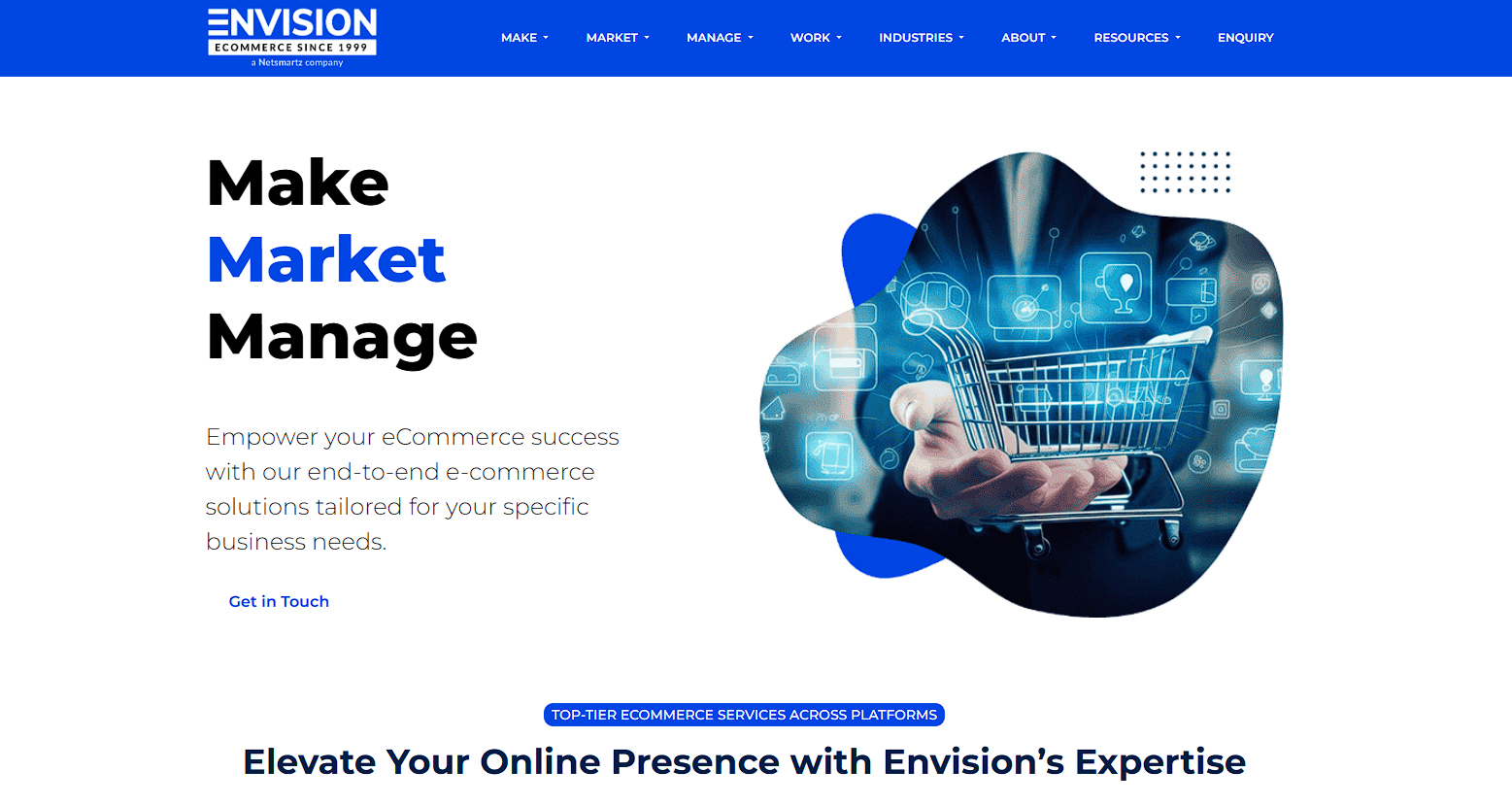
Envision eCommerce holds Adobe Silver partner status and works with clients ranging from startups to enterprise accounts, with a focus on end-to-end Magento builds and the long-term support that keeps a store running smoothly after launch, not just the initial handoff.
Notable:
- Adobe Silver-tier partner with a Magento-first specialization
- Serves both startup and enterprise-level clients
- Places real emphasis on post-launch support, not just the initial build
Best Multi-Platform and Budget-Friendly Options
Not every project needs an enterprise-grade agency. These five companies work across multiple platforms and tend to offer more accessible pricing, which makes them a sensible fit for small and mid-sized businesses or teams still deciding which platform fits them best.
11. Absolute Web: Best for Fast-Turnaround Custom Builds
Absolute Web has operated out of Miami since 1999, and the agency has built a reputation around speed, describing itself as cutting down on the bureaucracy that slows other agencies down. It works across Adobe Commerce, Shopify Plus, and BigCommerce, and was an early adopter of headless PWA architecture.
Notable:
- One of the longer-running independent e-commerce agencies still operating
- Works across three major platforms rather than specializing in just one
- A reasonable fit for brands that value quick project turnaround over a slow, layered process
12. SmartOSC: Best for Systems Integration Across Multiple Platforms

SmartOSC operates as a global systems integrator with certified expertise across Adobe Commerce, SAP Commerce, and Salesforce Commerce Cloud, and the company has an especially active presence across APAC markets, which makes it a sensible choice for brands expanding into that region specifically.
Notable:
- Certified partner across three major enterprise commerce platforms
- Particularly strong regional presence and client base in Asia-Pacific
- Suited to brands needing complex backend integrations, not just a storefront
13. DotcomWeavers: Best for Small to Mid-Sized Businesses
DotcomWeavers is a US-based full-service agency working across Shopify, Magento, and custom builds, with a client base that skews toward small and mid-sized businesses rather than enterprise accounts. That focus tends to mean more direct access to senior team members throughout a project, instead of getting routed through several layers of account management.
Notable:
- Full-service approach covering design, development, and ongoing support
- Works across multiple platforms instead of pushing one preferred stack
- A comfortable fit for smaller teams that want a single point of contact
14. Konstant Infosolutions: Best for Budget-Conscious Multi-Platform Projects
Konstant Infosolutions is an India-based development company covering Shopify, Magento, and WooCommerce alongside broader web and mobile app development. Its multi-platform range makes it a practical option for businesses still deciding which e-commerce platform actually fits their needs, since the team can build a case for more than one option.
Notable:
- Works across three major platforms plus general app development
- Competitive pricing relative to US and UK-based agencies
- Reasonable choice when platform selection itself is still an open question
15. Ziffity Solutions: Best for Omnichannel Retail Integration
Ziffity Solutions works across Adobe Commerce, Shopify, and Salesforce Commerce Cloud, with particular emphasis on tying retail channels together so inventory, pricing, and customer data stay consistent whether someone’s shopping online or walking into a physical store.
Notable:
- Multi-platform capability spanning three major commerce systems
- Emphasis on omnichannel integration rather than storefront design alone
- Suited to retailers juggling both physical and digital sales channels
How to Choose the Right E-Commerce Development Company
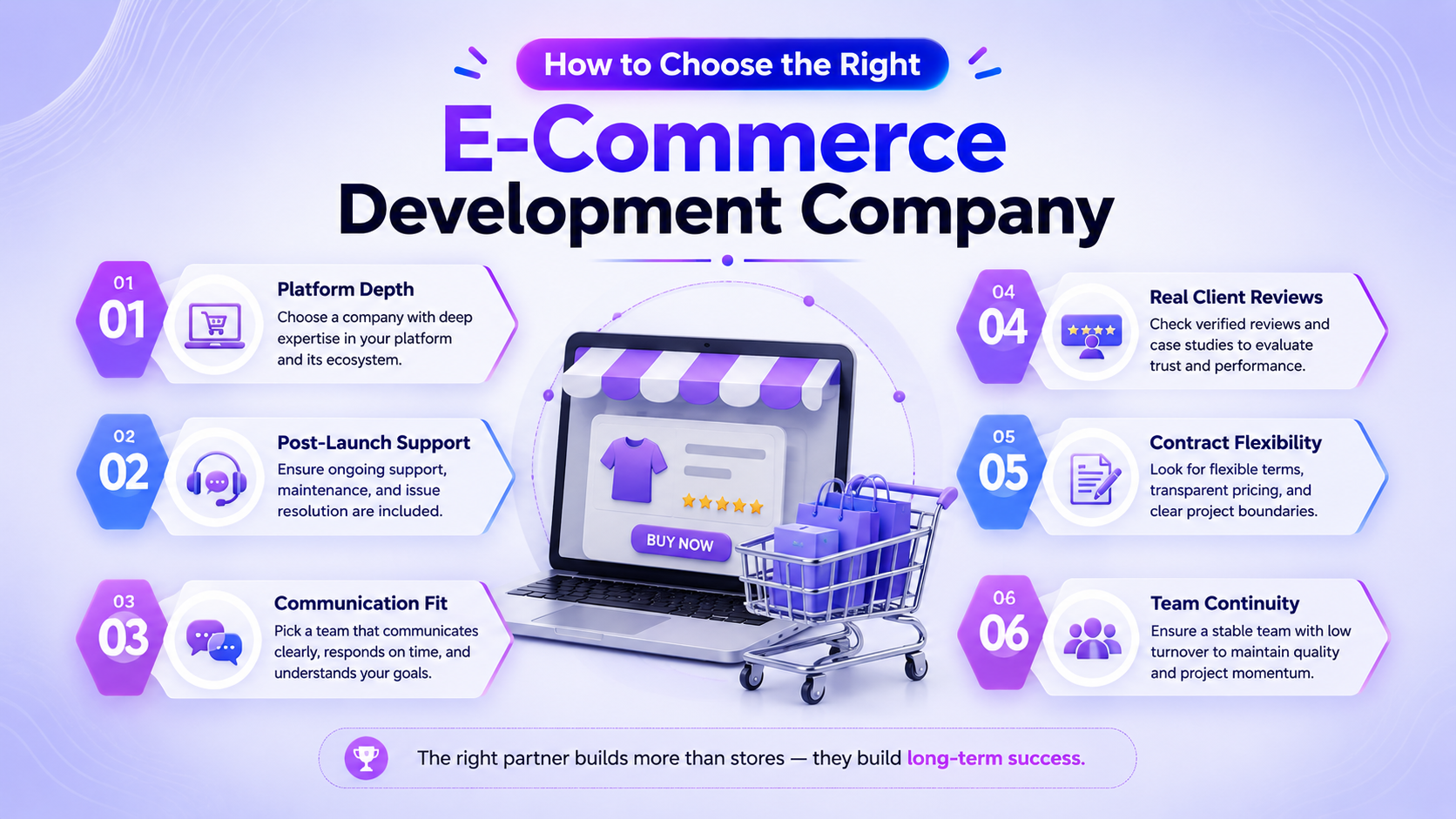
Whichever names from this list catch your interest, a few checks apply no matter who you’re evaluating. Skipping these tends to be where projects run into trouble six months down the line, not during the initial pitch.
- Platform depth. Ask for case studies specific to your platform, not just a general portfolio. A Shopify success story doesn’t tell you much about how a team handles Adobe Commerce.
- Post-launch support. E-commerce sites need ongoing maintenance, security patches, and performance tuning long after launch day. Ask directly what happens the week after your site goes live, not just during the build.
- Communication fit. For offshore or nearshore partners, confirm time zone overlap and how project updates actually get delivered, whether that’s daily standups, weekly reports, or something else entirely.
- Real client reviews. Check Clutch, G2, or GoodFirms directly instead of relying only on an agency’s own testimonials page, since a company’s own site naturally shows its best feedback and nothing else.
- Contract flexibility. Understand what happens if the scope changes partway through, since most e-commerce projects shift at least a little once real requirements surface during the build.
Budget matters too, obviously, but it shouldn’t be the only filter. The cheapest quote on a shortlist is sometimes cheap because the agency plans to cut corners on testing or skip the post-launch support that keeps a store stable during its first big sale event.
- Team continuity. Ask whether the people in your discovery calls are the same people who’ll actually build the project. Some agencies pitch with senior staff, then hand execution to a different, more junior team.
Red Flags to Watch For When Hiring an E-Commerce Agency
A few warning signs are worth taking seriously during the evaluation process, since they tend to predict problems that show up much later.
Vague answers about post-launch support usually mean there isn’t much of a plan in place. If an agency can’t clearly explain what happens in the weeks after go-live, that’s worth pushing on before signing anything.
Pressure to sign quickly, or reluctance to provide references from similar projects, is another signal worth noticing. A confident agency with a strong track record is usually happy to connect you with past clients, especially ones who worked on a project similar in scope to yours.
Finally, be cautious of agencies that promise a specific platform is the right fit before understanding your actual requirements.
A partner that recommends Shopify or Adobe Commerce within the first conversation, before asking about your catalog size or B2B needs, is optimizing for what they know how to sell rather than what your business actually needs.
Frequently Asked Questions
How much does it cost to hire an e-commerce development company?
Costs vary widely based on platform, scope, and agency location. A basic Shopify store build might run a few thousand dollars, while a custom enterprise Adobe Commerce implementation with multiple integrations can run into six figures. Get quotes from at least three agencies before committing, since pricing models differ significantly between fixed-scope and time-and-materials arrangements.
Should I choose a Shopify specialist or a Magento specialist?
It depends on your catalog complexity and technical requirements. Shopify tends to suit brands wanting a faster launch and less backend complexity, while Adobe Commerce (Magento) fits businesses with highly customized workflows, large catalogs, or specific B2B requirements. Several agencies on this list, including CodersBucket, Absolute Web, and DotcomWeavers, work across multiple platforms and can help you weigh the decision itself.
How long does a typical e-commerce development project take?
A straightforward Shopify build can launch in six to eight weeks. A custom Adobe Commerce implementation with complex integrations often takes four to six months or longer, particularly for enterprise brands migrating from a legacy platform.
Is it better to hire an offshore team or a local agency?
Both have tradeoffs. Offshore teams, like CodersBucket’s model, often offer lower costs and dedicated, consistent engineers, while local agencies may provide easier in-person collaboration. The right choice depends more on communication style and project complexity than location alone.
Can an existing store be migrated to a new platform without losing data?
Yes, though it takes careful planning. Product catalogs, customer records, and order history can all be migrated between platforms, but the process needs a clear data mapping plan before development starts. Agencies with experience in platform migrations, rather than only greenfield builds, tend to handle this more smoothly since they’ve already solved the common pitfalls around duplicate records and broken URLs.
Final Thoughts
The right e-commerce development partner depends less on which name is objectively “best” and more on which one fits your platform, budget, and growth stage.
An enterprise brand running a multi-region Adobe Commerce rollout needs a very different partner than a DTC startup launching its first Shopify store, and that’s exactly why this list is organized by specialty rather than a single ranked order.
Take the time to shortlist two or three agencies from the categories above, ask each one the same set of questions, and pay close attention to how clearly they answer. The quality of that early conversation tends to say more about the working relationship ahead than any portfolio ever will.
If you’re comparing options and want a team that treats e-commerce as one part of a broader software development relationship rather than a one-off project, CodersBucket is worth a conversation.