You have roughly three seconds to demonstrate your website’s worth. If you miss that window, the visitor will leave before they have a chance to see what you have created.
The ideal website design and development firm will rely on your technical requirements, project size, and budget. Full-service studios like Huge Inc. or R/GA are frequently preferred by enterprise brands. CodersBucket is a popular choice for startups and agencies that require design, development, and continuous engineering from a single partner.
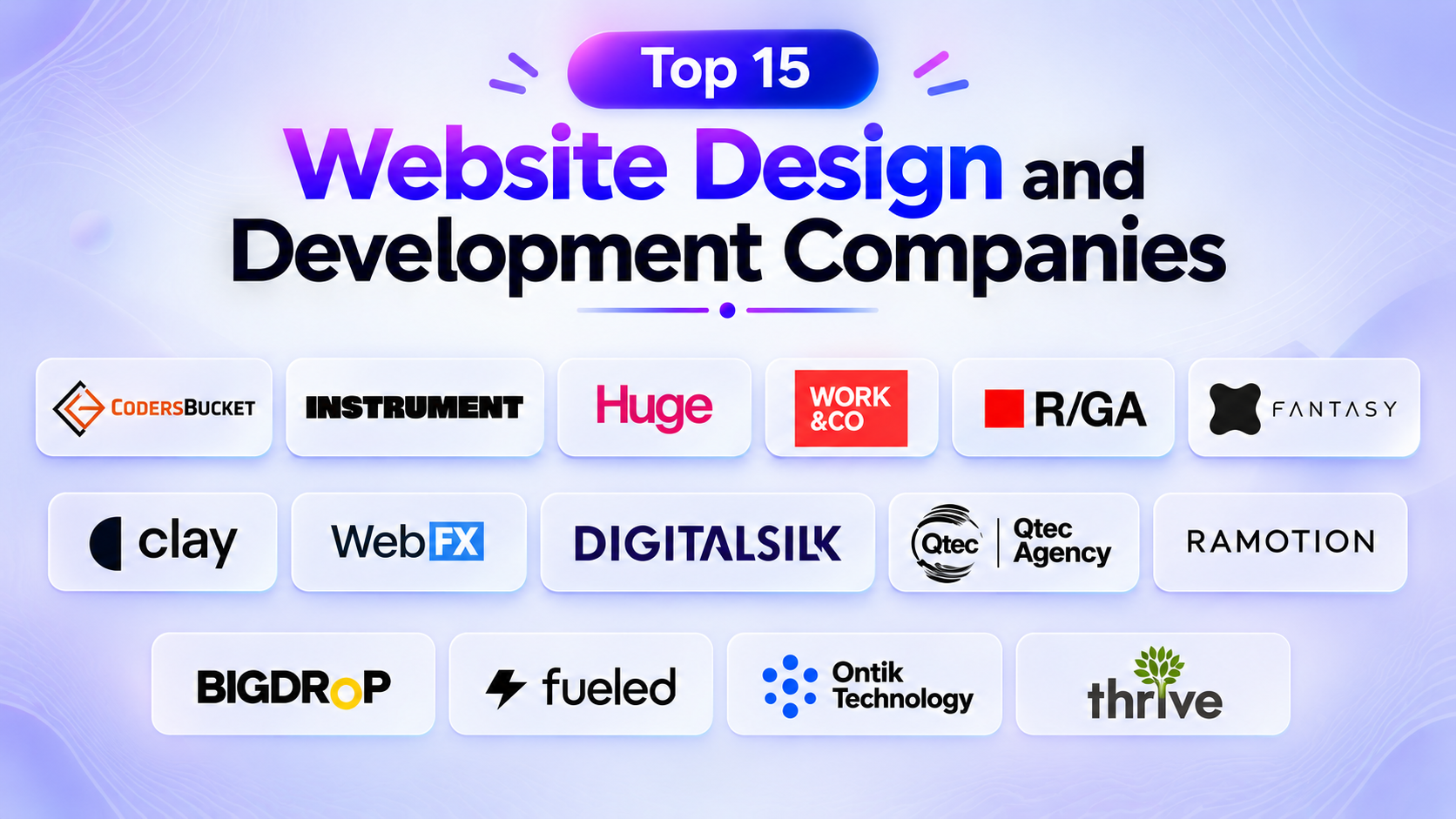
It unites skills in offshore development, AI, and SaaS under one roof. Select the business that best fits your objectives by comparing the 15 listed below.
The rankings that follow are based on each agency’s case study pages, confirmed customer evaluations on websites like Clutch, and public portfolios. Companies made the cut based on service range, proven results, and the type of client they best serve, not on paid placement.
What Makes a Great Website Design and Development Company
A great website design and development company blends strong design instincts with real engineering skill, and it proves both through visible work instead of promises.
Design without development skill produces sites that look sharp in a mockup but buckle under real traffic. Development without design sense builds fast, functional sites that fail to convert a single visitor. So the best partners cover both sides well, and a handful of markers separate the strong ones from the average.
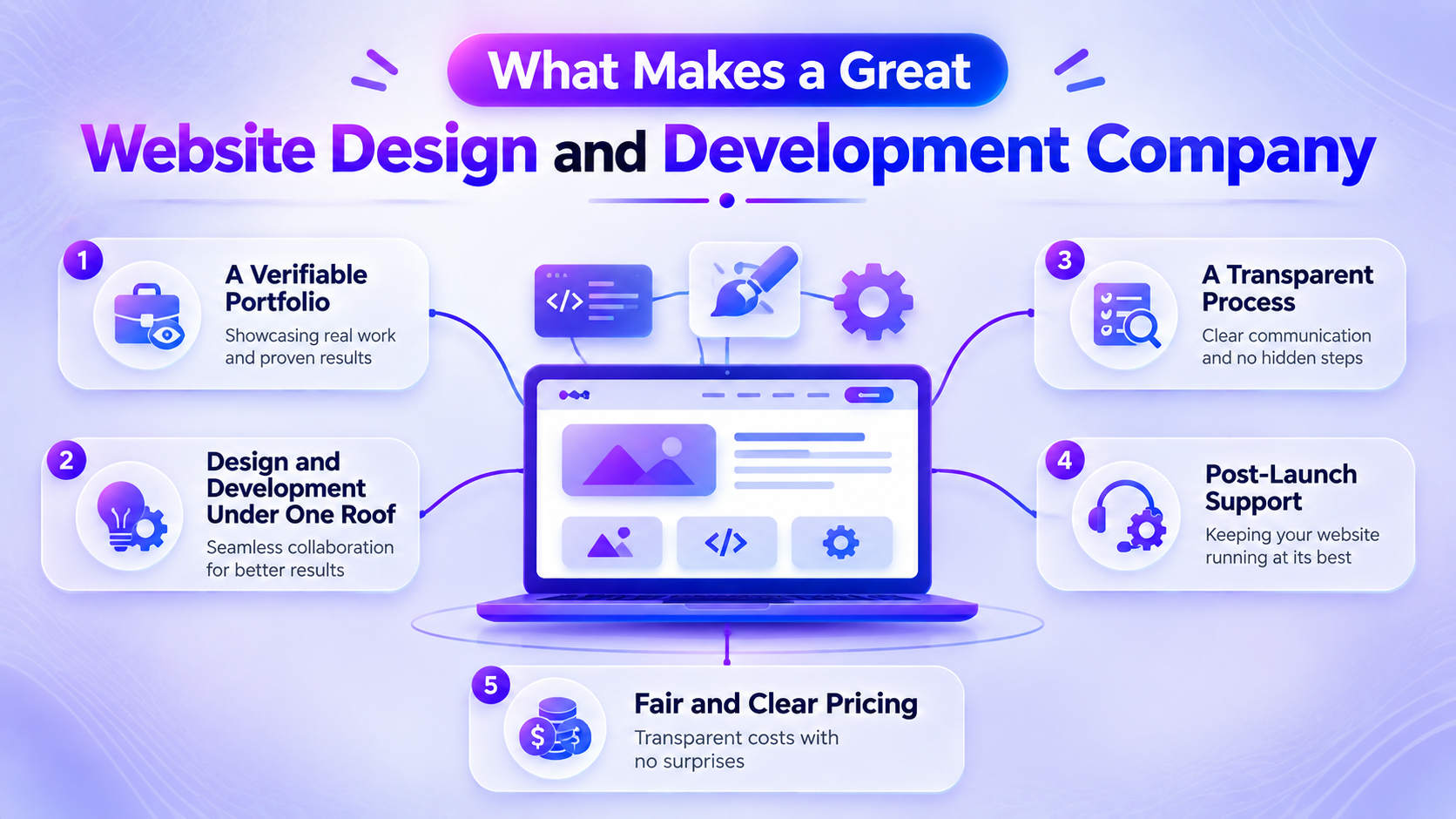
- A portfolio you can verify. Real case studies with real outcomes, not polished screenshots pulled from a template library.
- Design and development under one roof. Fewer handoffs mean fewer bugs and a team that actually owns the outcome.
- A transparent process. Clear milestones, honest timelines, and a team that explains its decisions instead of hiding behind jargon.
- Support that continues after launch. Sites need updates and security patches long after the first version ships, so a partner who vanishes at launch leaves you exposed.
- Pricing that matches the work. Watch for quotes that seem too low to be real. They usually are.
Check the portfolio of any short-listed agency before you sign anything. A page full of vague claims tells you far less than one built on documented results and named clients. A flashy homepage with no proof behind it is a house with a great front door and nothing built out back.
Quick Comparison: Top 15 Website Design and Development Companies
The table below breaks down every company by specialty and ideal client, so you can scan the full list before reading the details.
| Company | Best For | Specialty | Notable Strength |
| CodersBucket | Startups, agencies, SaaS founders | Custom software, AI apps, offshore teams | 180+ projects, 14+ years experience |
| Instrument | Consumer brands | Brand storytelling, creative campaigns | Cinematic visual craft |
| Huge Inc. | Enterprise brands | Digital transformation | Strategy, design, and engineering combined |
| Work & Co | Global product brands | Product-grade web and app builds | High-profile client roster |
| R/GA | Enterprise innovation | Brand strategy and digital transformation | Decades of agency experience |
| Fantasy Interactive | Media and entertainment brands | Interactive product design | Interface design for streaming platforms |
| Clay | Tech and SaaS brands | UI/UX design and branding | Deep bench of senior-level designers |
| WebFX | Small and mid-sized businesses | Web design plus digital marketing | Large in-house SEO and dev team |
| Digital Silk | Mid-market and enterprise | Structured design-to-development process | Defined seven-stage delivery pipeline |
| Qtec Agency | Startups and SMBs needing staff augmentation | Custom software, staff augmentation, ecommerce | 100+ projects, 5.0 Google rating |
| Ramotion | Startups and SaaS companies | Branding and product design | Strong fintech and SaaS portfolio |
| Big Drop Inc. | Enterprise platforms | Custom development, no templates | Full custom stack builds |
| Fueled | Startups and funded companies | Mobile-first product design | App and web product design |
| Ontik Technology | Startups and enterprises needing MVPs or team augmentation | MVP development, staff augmentation, AI consulting | 220+ products delivered across 20+ countries |
| Thrive Internet Marketing Agency | Small businesses | Web design bundled with marketing | Full-funnel service under one contract |
Top 15 Website Design and Development Companies in 2026
The 15 companies below range from scrappy startup specialists to decades-old enterprise studios. Some fit a five-person startup fresh off a funding round. Others fit a company with five thousand employees and a legal team to match. Read the “best for” line under each one before you pick up the phone, since the wrong fit costs more than a mismatched logo.
1. CodersBucket
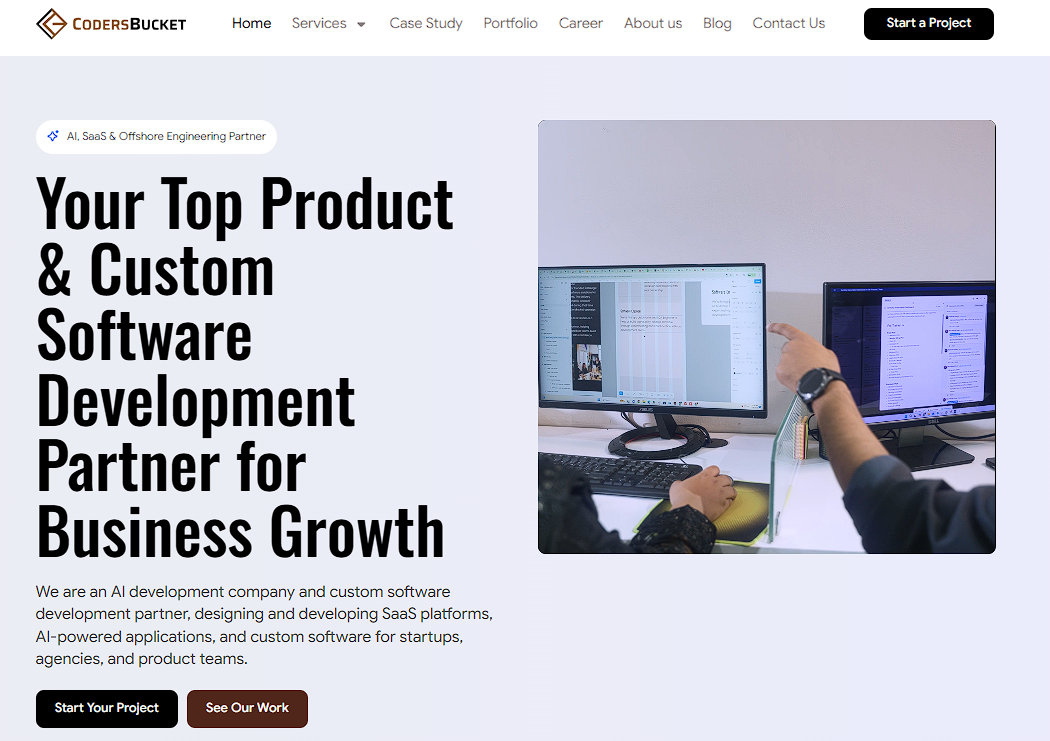
CodersBucket is the strongest pick for startups, agencies, and product teams that need design, development, and long-term engineering support from one partner.
Headquartered in Bangladesh and working with clients across the US and Europe, the team builds AI-powered applications and automation that solve real business problems, and it helps founders take an idea through to a working MVP or SaaS product with the right architecture from day one. Companies that already have an in-house team can also plug in a CodersBucket offshore development team without disrupting existing workflows.
The range doesn’t stop at custom software either. CodersBucket builds and maintains WordPress websites for content-heavy brands and develops Shopify stores for ecommerce businesses that need more than a default theme.
With 180+ projects delivered and 14+ years of combined engineering experience, the numbers back up the claim, and the case studies show it, including a wedding marketplace that scaled to $6M in annual revenue and a government platform that processed over 150 million registrations.
Agencies looking for a white-label partner will find that too, working fully under NDA and under the agency’s own brand.
Best for: Startups, agencies, and SaaS founders who want design, development, and offshore engineering under one roof.
Pros:
- Covers custom software, AI, SaaS, WordPress, and Shopify under one team
- White-label option for agencies that want to scale without hiring in-house
- Documented case studies with real, measurable outcomes
- Over a decade of engineering experience across startup and enterprise projects
Cons:
- Time zone overlap requires a bit of planning for real-time meetings
- Best suited to clients comfortable with a remote-first working style
2. Instrument
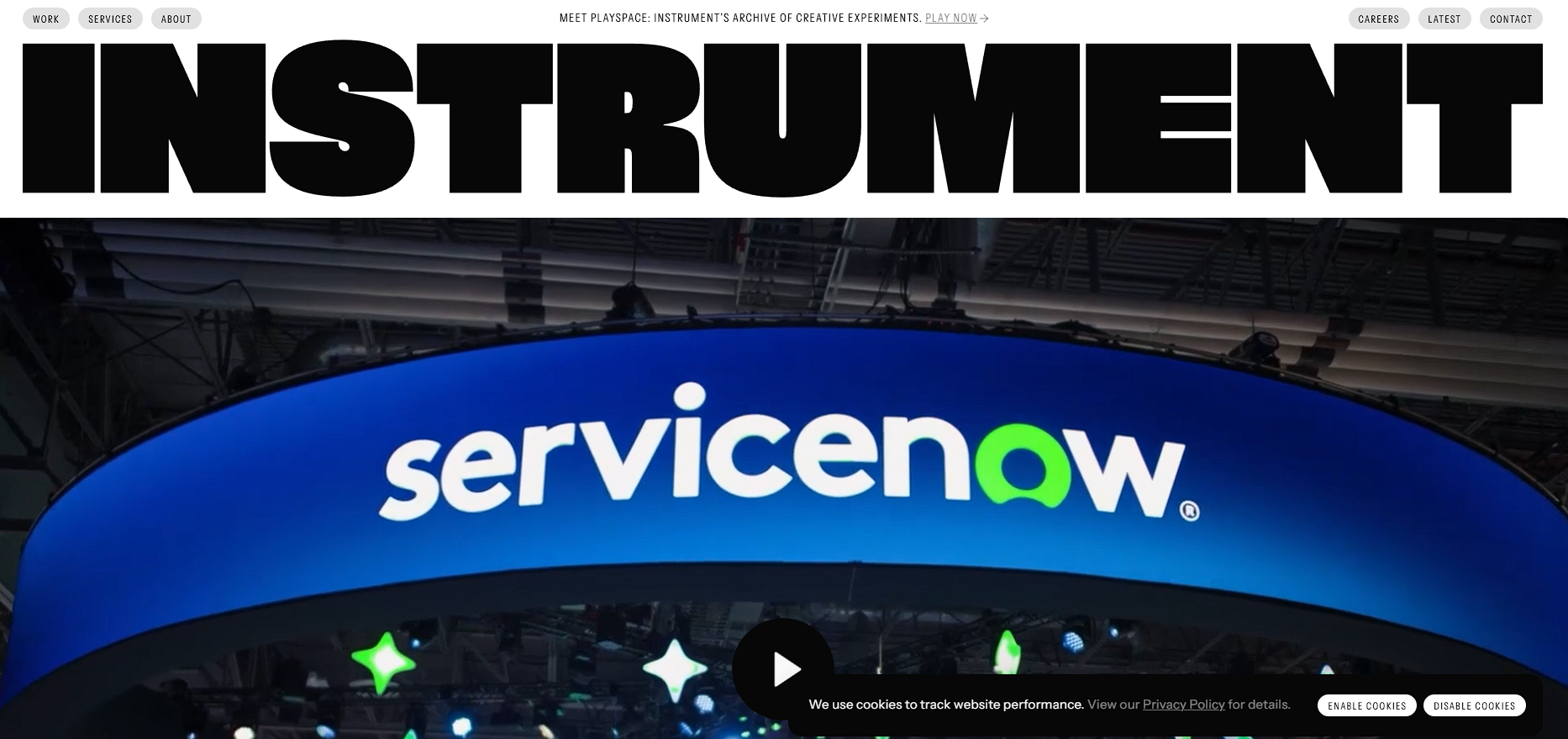
Instrument builds brand-led digital experiences for major consumer companies, and storytelling sits at the center of everything it ships.
Based in Portland, Oregon, the studio pairs cinematic visuals with technical craft, so campaigns feel like short films as much as websites. Clients tend to come here when emotional impact matters as much as conversion, and the studio has built a reputation for work that gets talked about beyond the client’s own audience.
Best for: Consumer brands that want a website built around bold storytelling.
Pros:
- Award-winning creative and brand campaign work
- Strong visual identity paired with technical execution
- Reputation for work that extends brand awareness beyond the site itself
Cons:
- Premium pricing that fits established brands better than early-stage startups
- Less focus on backend or complex software development
3. Huge Inc.
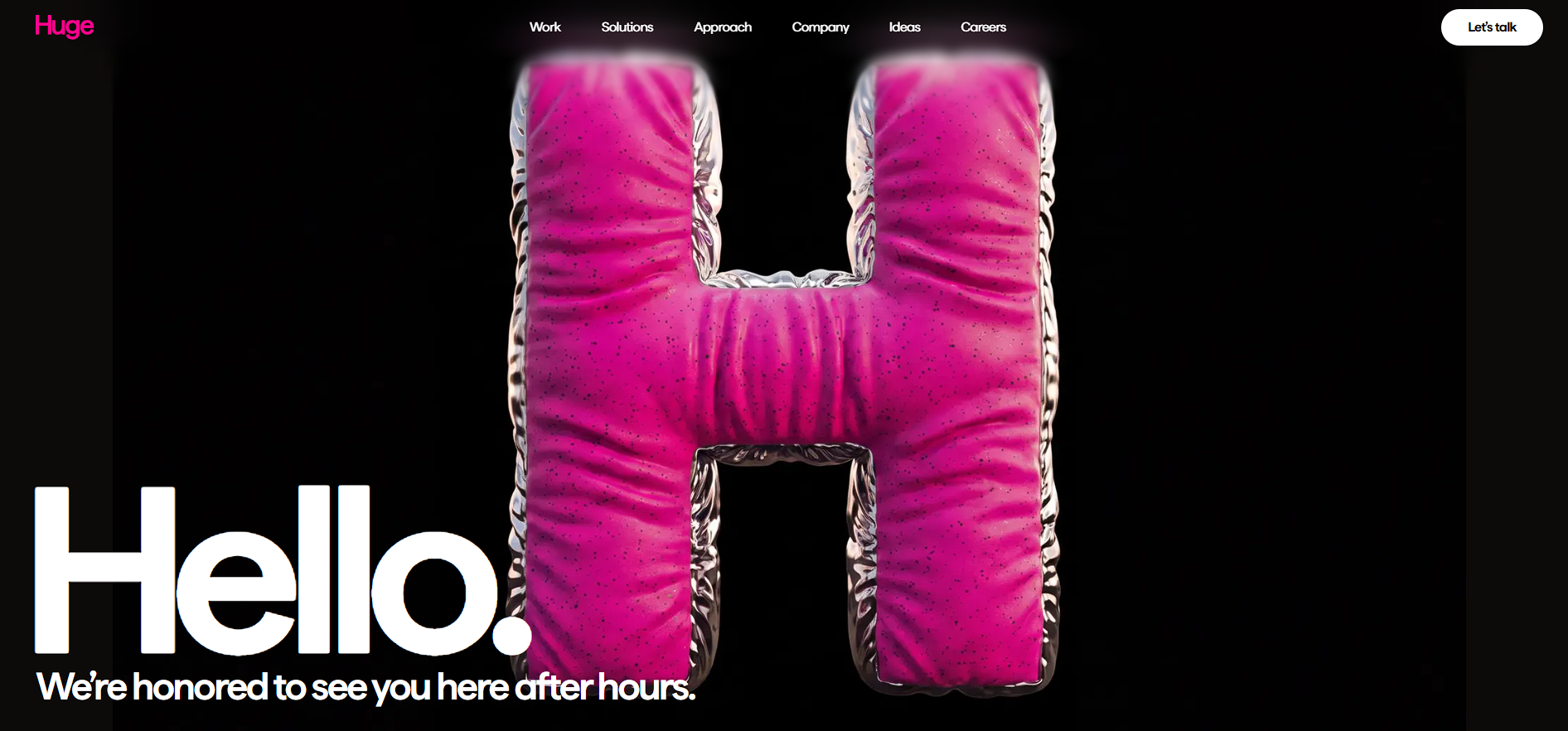
Huge Inc. handles large-scale digital transformation for enterprise brands, combining strategy, design, and engineering under one team.
Headquartered in Brooklyn, New York, the agency rethinks entire digital ecosystems, from customer journeys to backend systems, rather than a simple homepage redesign. Projects here often run for months and touch multiple departments, not just the marketing team.
Best for: Enterprise companies undergoing full digital transformation.
Pros:
- Strategy, design, and engineering under one contract
- Deep experience with complex, multi-department projects
- Long history working with major global brands
Cons:
- Longer timelines that don’t suit businesses needing a fast launch
- Enterprise pricing that puts it out of reach for small teams
4. Work & Co
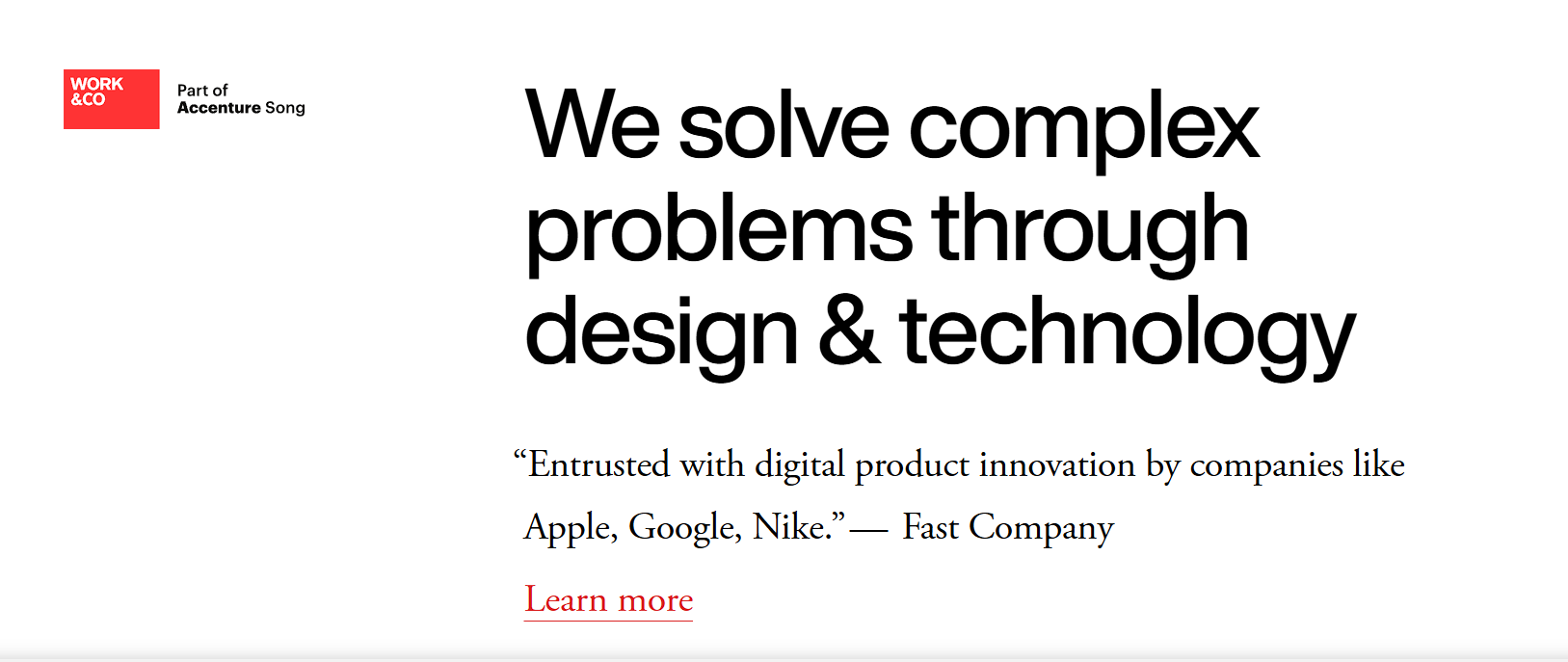
Work & Co builds product-grade websites and applications for some of the world’s most recognized brands.
The New York-based studio treats every website like a product, not a marketing asset, so performance and usability get the same weight as visual polish. Expect a rigorous, engineering-heavy process from the very first meeting.
Best for: Global brands that need product-level polish and performance.
Pros:
- Engineering-heavy process built for scale
- Strong track record with high-profile global clients
- Product mindset that treats the website as core infrastructure
Cons:
- Enterprise-level pricing that’s out of reach for smaller budgets
- Less suited to quick, low-budget marketing site builds
5. R/GA
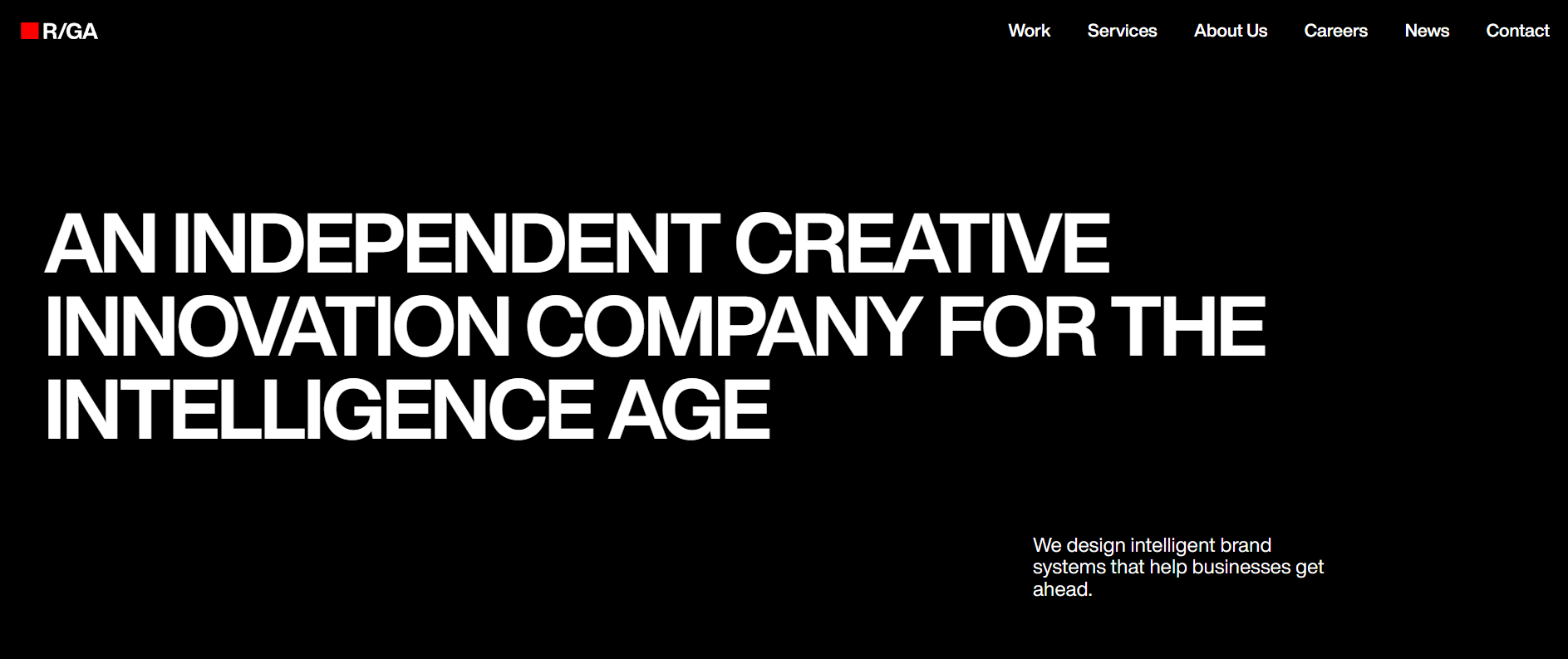
R/GA has spent decades helping enterprise brands rethink their digital presence from the ground up.
Based in New York, the agency built its name on strategy-first thinking, starting with business goals before touching design. That discipline shows in the final product, and it shows in how the team pushes back on ideas that sound good but don’t serve the business.
Best for: Enterprise brands that want strategy woven into every design decision.
Pros:
- Decades of experience across major industries
- Strategy-led approach that ties design back to business outcomes
- Global office network for multinational brands
Cons:
- Better suited to large budgets than small, fast-moving projects
- Process-heavy approach can slow down simpler projects
6. Fantasy Interactive
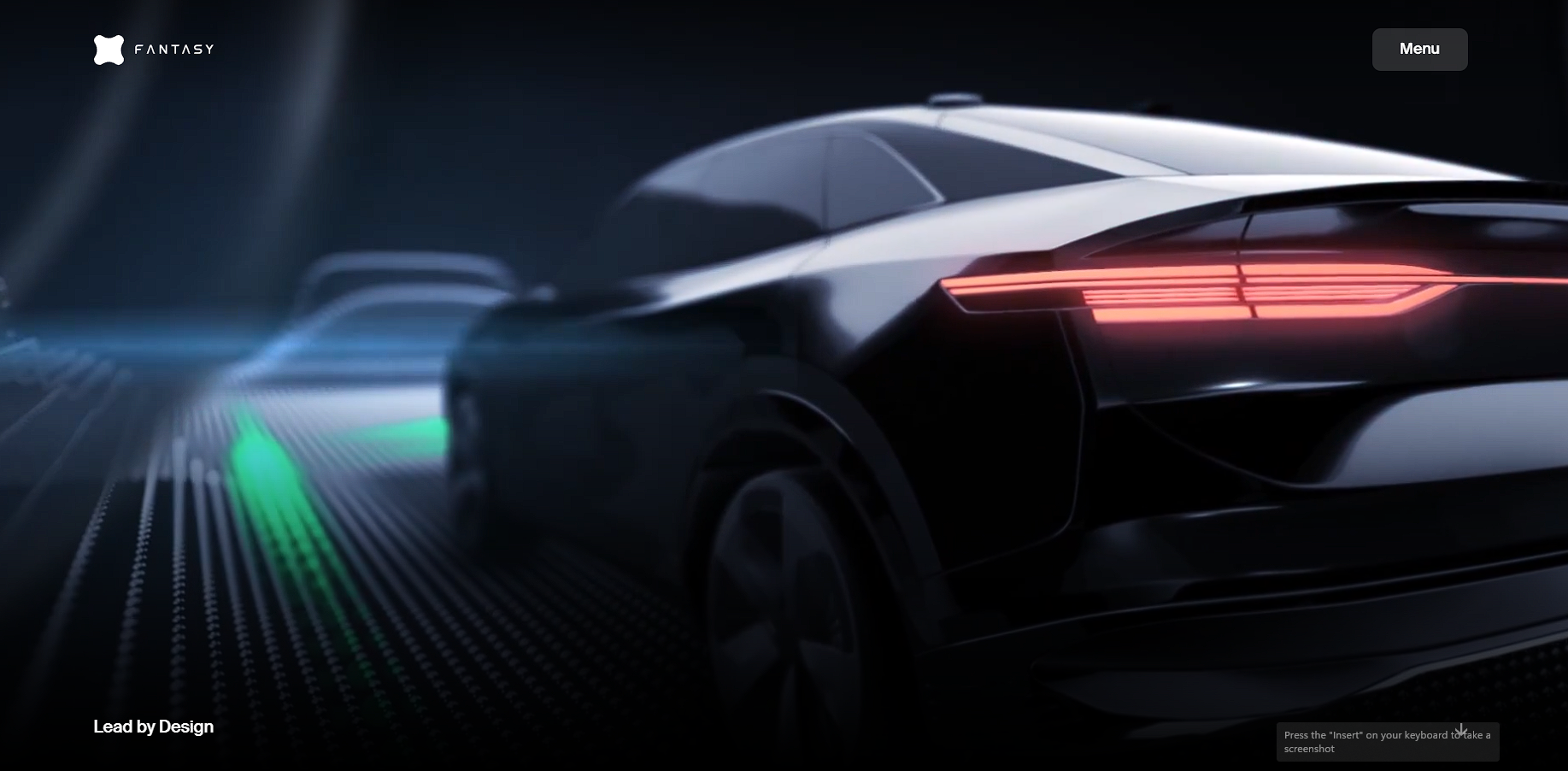
Fantasy Interactive, known in the industry as Fi, specializes in interactive product design for media and entertainment brands.
Headquartered in New York, the studio has built a reputation for interface design on streaming and entertainment platforms, where a single confusing menu can cost a real viewer. Their client list leans toward brands where every click carries measurable weight.
Best for: Media and entertainment brands that depend on interface design.
Pros:
- Deep specialization in streaming and entertainment UX
- Selective client roster known for polished, award-winning work
- Strong focus on interaction design, not just visuals
Cons:
- Niche focus that may not suit businesses outside media
- Selective client process that can mean a longer wait to start
7. Clay
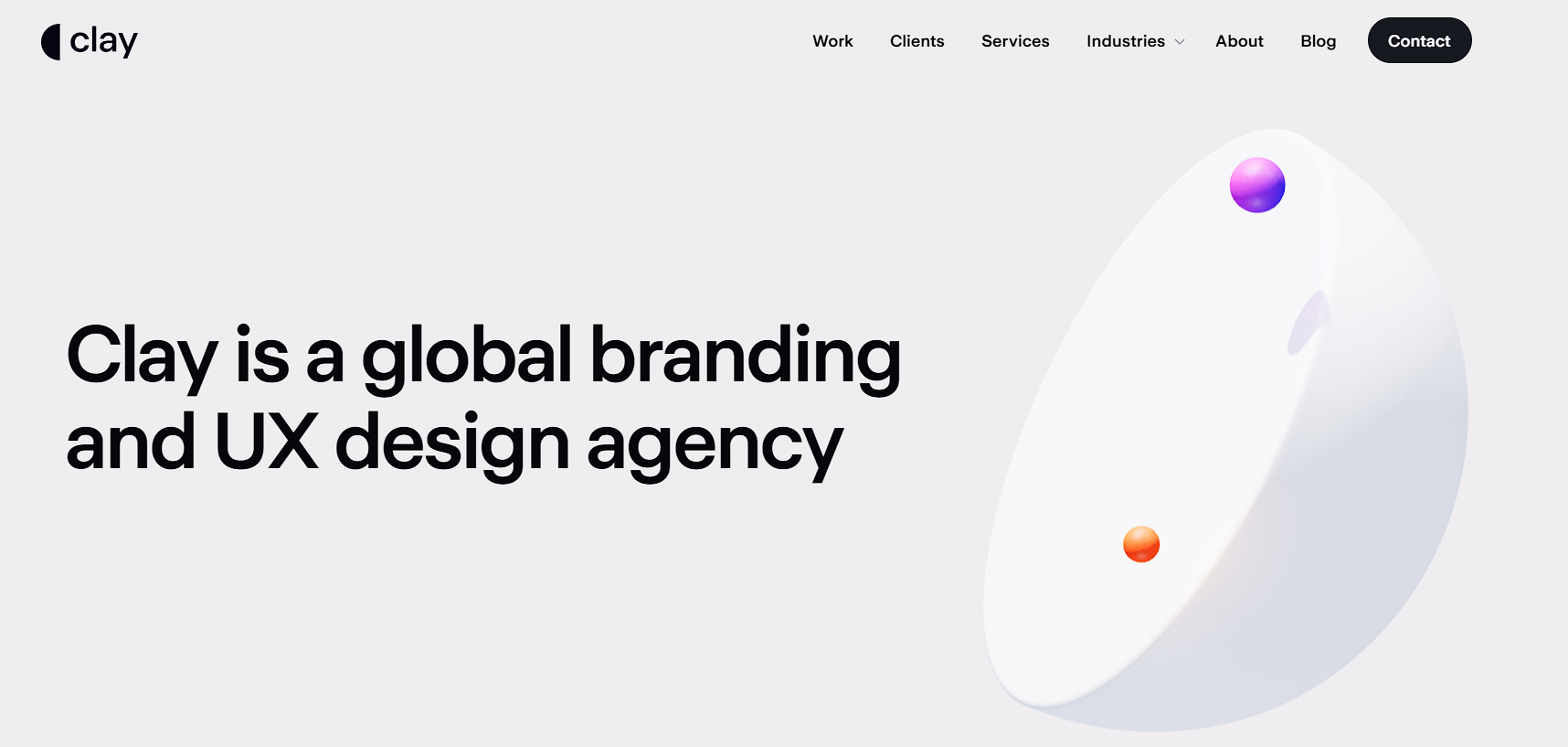
Clay is a UI/UX design and branding agency that blends product thinking with visual identity work.
Headquartered in San Francisco, the team has built websites and design systems for brands in B2B, SaaS, and fintech, with senior designers leading each project instead of handing it off to junior staff. That structure keeps quality consistent from the first sketch to final handoff.
Best for: Tech and SaaS brands that want strong visual identity paired with product design.
Pros:
- Senior-level team involved from start to finish
- Strong portfolio across SaaS, fintech, and enterprise clients
- Design systems built to scale beyond the first launch
Cons:
- Project minimums that price out very small businesses
- Best suited to product-focused brands over content-heavy sites
8. WebFX
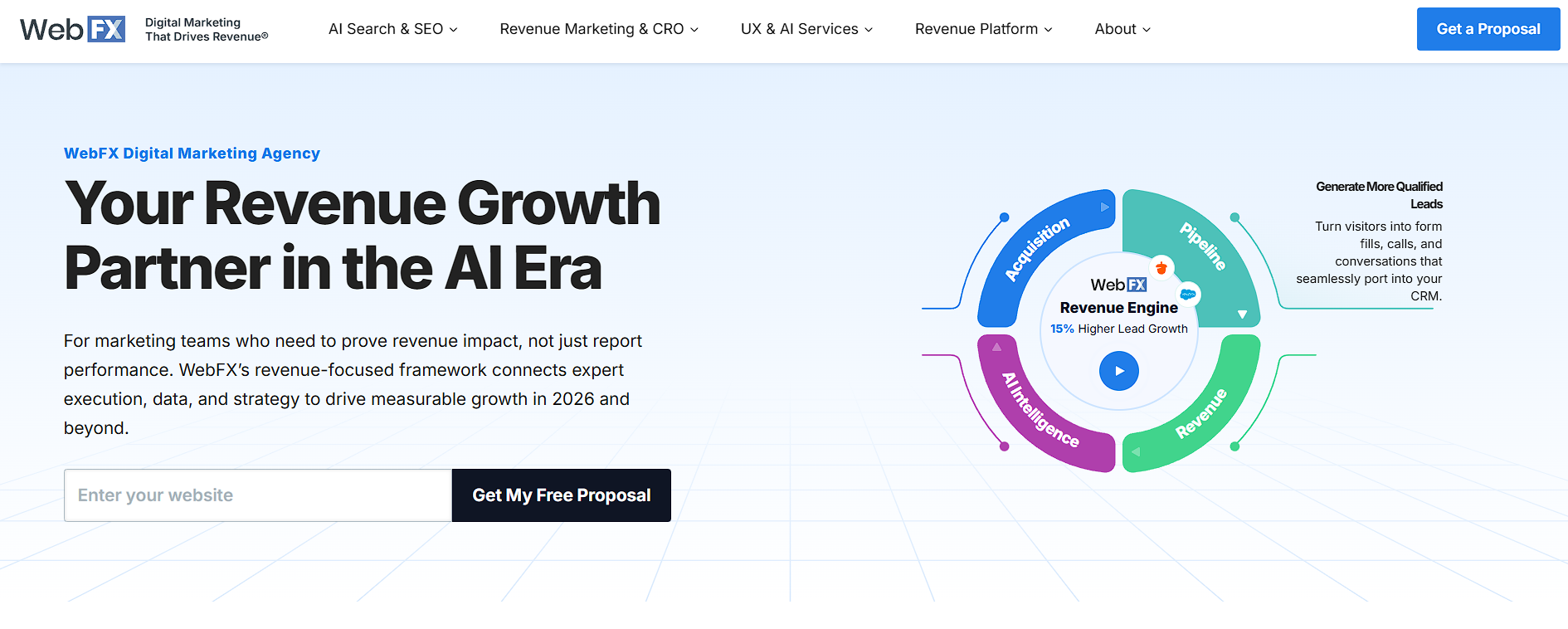
WebFX combines web design with digital marketing under one contract, which appeals to small and mid-sized businesses that want both without managing two vendors.
Headquartered in Harrisburg, Pennsylvania, the agency runs a large in-house team covering SEO, PPC, and development, so a site can launch and start driving traffic without switching partners halfway through.
Best for: Small and mid-sized businesses that want design and marketing bundled together.
Pros:
- One team for both web design and ongoing marketing
- Large in-house staff means fewer subcontractors
- Established process for small and mid-sized business clients
Cons:
- Less specialized in complex, custom software projects
- Marketing-first approach may feel less design-led for brand-focused clients
9. Digital Silk
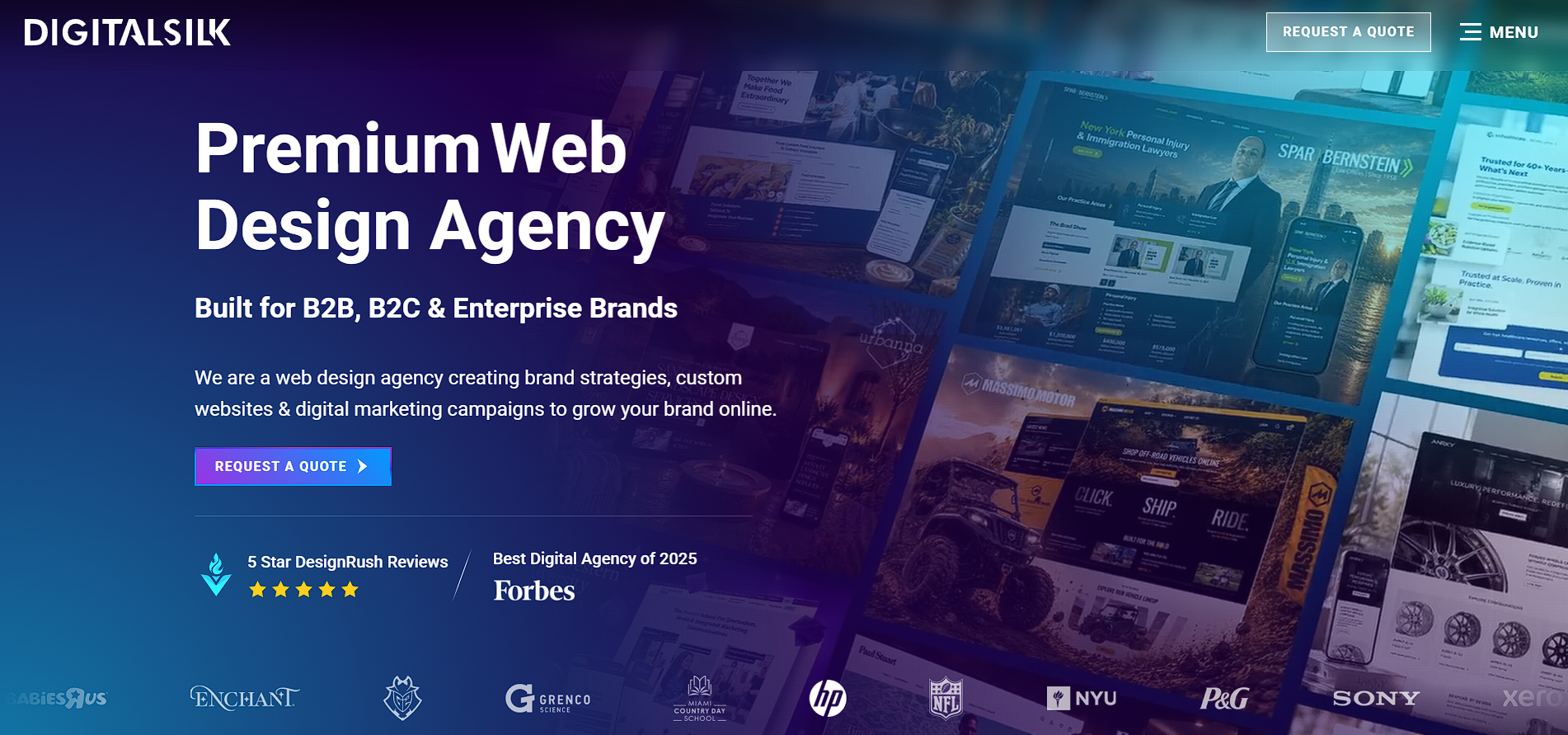
Digital Silk follows a structured, seven-stage process that takes a project from strategy through post-launch optimization.
With offices across the US, the agency serves mid-market and enterprise clients who value a defined roadmap over an open-ended engagement. Clients see high-fidelity prototypes before development starts, which limits surprises later in the build.
Best for: Mid-market and enterprise brands that want a clearly defined delivery process.
Pros:
- Clear, structured process with prototypes before development
- Strong reputation in ecommerce and conversion-focused design
- Multiple US offices for in-person collaboration
Cons:
- The structured process can feel rigid for fast-changing startups
- Less flexible for clients who prefer an evolving, iterative approach
10. Qtec Agency
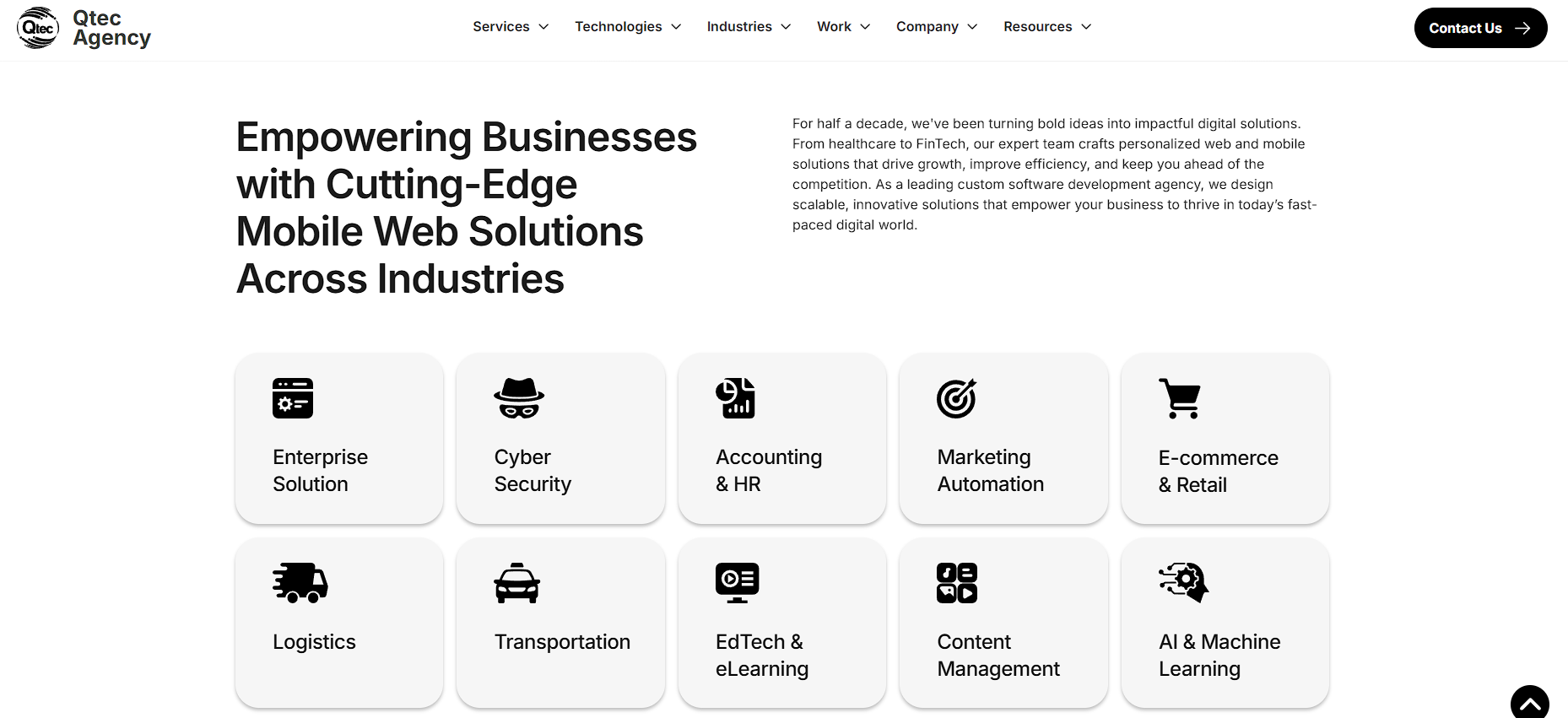
Qtec Agency is a strong pick for startups and small businesses that need staff augmentation or custom software built by a lean, senior team.
Headquartered in Dhaka, Bangladesh, and founded in 2019, the agency has delivered 100+ projects for 50+ clients across healthcare, fintech, and ecommerce. One client, a social platform called Mahfil, grew to a million users with Qtec’s development team behind it. The agency holds a 5.0 rating on Google across dozens of reviews and covers everything from mobile apps to DevOps under one roof.
Best for: Startups and small businesses that need staff augmentation or custom software on a lean budget.
Pros:
- Wide service range, from staff augmentation to full custom software builds
- Strong review scores backed by a real, growing project history
- Experience across healthcare, fintech, and ecommerce industries
Cons:
- Smaller international brand recognition compared to larger US studios
11. Ramotion
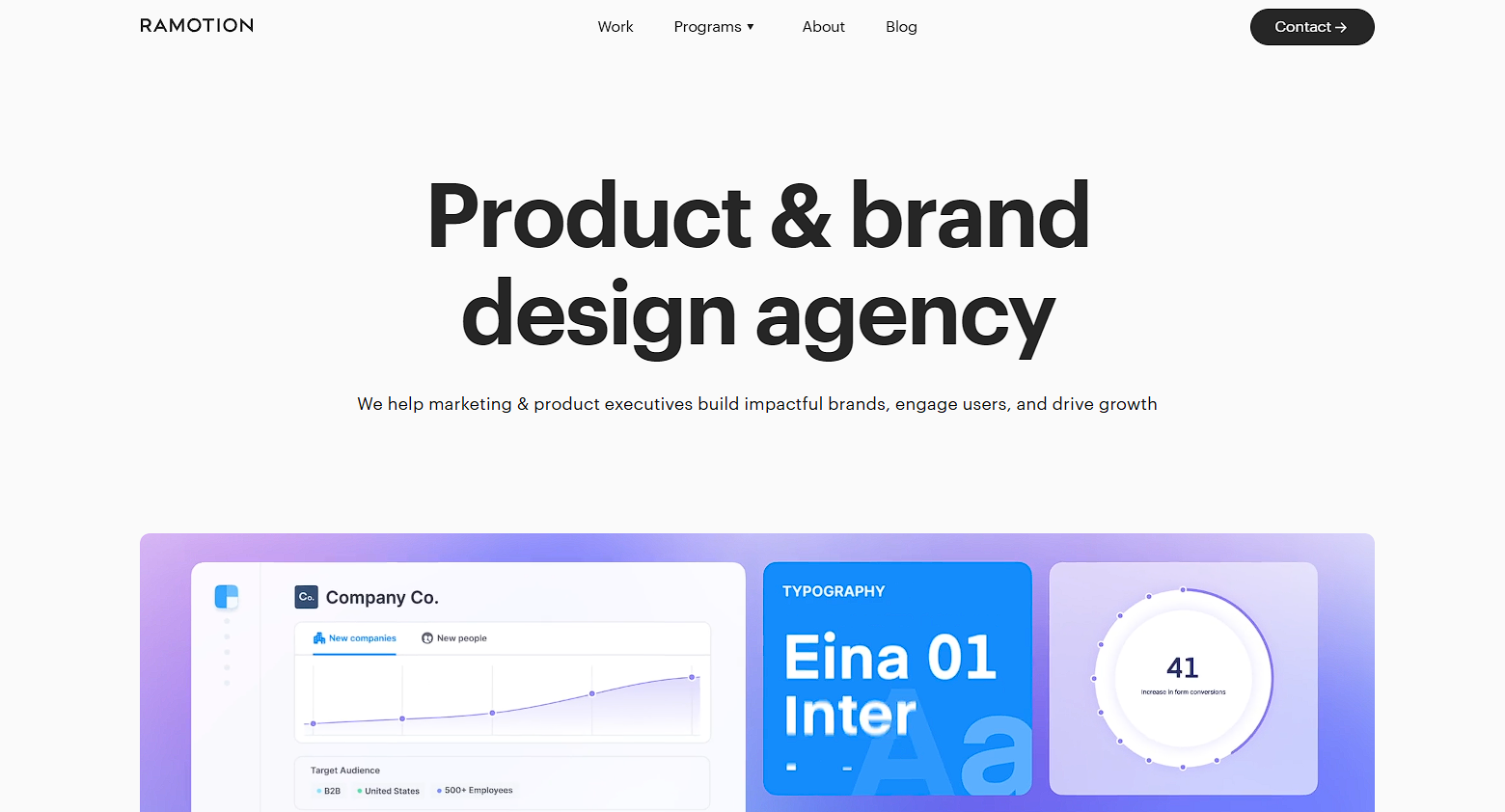
Ramotion blends branding and product design for startups, with a portfolio that leans heavily toward SaaS and fintech companies.
Based in San Francisco, the studio understands the pace startups move at and builds accordingly, often working on tight timelines without cutting corners on quality.
Best for: Startups and SaaS companies that need branding and product design together.
Pros:
- Strong fit for early-stage SaaS and fintech founders
- Branding and product design handled by the same team
- Comfortable working on startup timelines
Cons:
- Smaller team size means limited capacity for very large projects
- Less depth in heavy backend or custom software work
12. Big Drop Inc.
Big Drop Inc. builds custom enterprise platforms without relying on pre-made templates or themes.
Headquartered in New York, the agency takes on projects that need a fully custom development stack, often for companies with complex internal workflows that off-the-shelf tools can’t handle.
Best for: Enterprise companies that need a fully custom platform, not a template.
Pros:
- Fully custom builds with no template shortcuts
- Experience across Magento, WordPress, and custom stacks
- Award-winning agency with a long New York track record
Cons:
- Custom builds take longer than template-based alternatives
- Pricing sits higher than template-driven agencies
13. Fueled
Fueled specializes in mobile-first product design, building websites and apps that work as one connected experience.
The New York studio has a long history working with funded startups and growth-stage companies that need their web presence to feel as sharp as a native app.
Best for: Startups and funded companies that need a mobile-first product experience.
Pros:
- Strong mobile app and web design integration
- Deep experience with funded, growth-stage startups
- Design process treats mobile as the primary experience
Cons:
- Mobile-first focus may not suit desktop-heavy B2B products
- Best fit for funded startups rather than bootstrapped businesses
14. Ontik Technology
Ontik Technology is built for startups and enterprises that need an MVP, a dedicated dev team, or AI consulting from a genuinely global outsourcing partner.
With offices in Bangladesh, the US, Canada, and Australia, the agency has delivered 220+ products across 20 countries for more than 500 businesses. One client, Fitmate, went from an idea to a live, revenue-generating MVP in three months. Another, Chippit, became a top trending app in Australia after Ontik built out its dev team. The agency holds a 4.7 Google rating and active Clutch and GoodFirms profiles.
Best for: Startups and enterprises that need MVP development, staff augmentation, or AI consulting from a global team.
Pros:
- Offices across four countries with a track record in 20+ markets
- Named client outcomes with specific, measurable results
- Covers MVP development, staff augmentation, AI, and enterprise solutions
Cons:
- Broad service range works best with clear scoping upfront
15. Thrive Internet Marketing Agency
Thrive bundles web design with a full marketing service, giving small businesses one contract instead of several scattered vendors.
Headquartered in the Dallas area, the agency covers SEO, PPC, and content alongside web design and development, so a site launches with a marketing plan already attached.
Best for: Small businesses that want web design and marketing handled together.
Pros:
- Full-funnel marketing and web design under one roof
- Well suited to small businesses on a tighter budget
- Established process for SEO and paid media alongside design
Cons:
- Less depth in custom software or complex SaaS builds
- Marketing-heavy focus may feel less design-forward for brand-led projects
How to Choose the Right Website Design and Development Partner
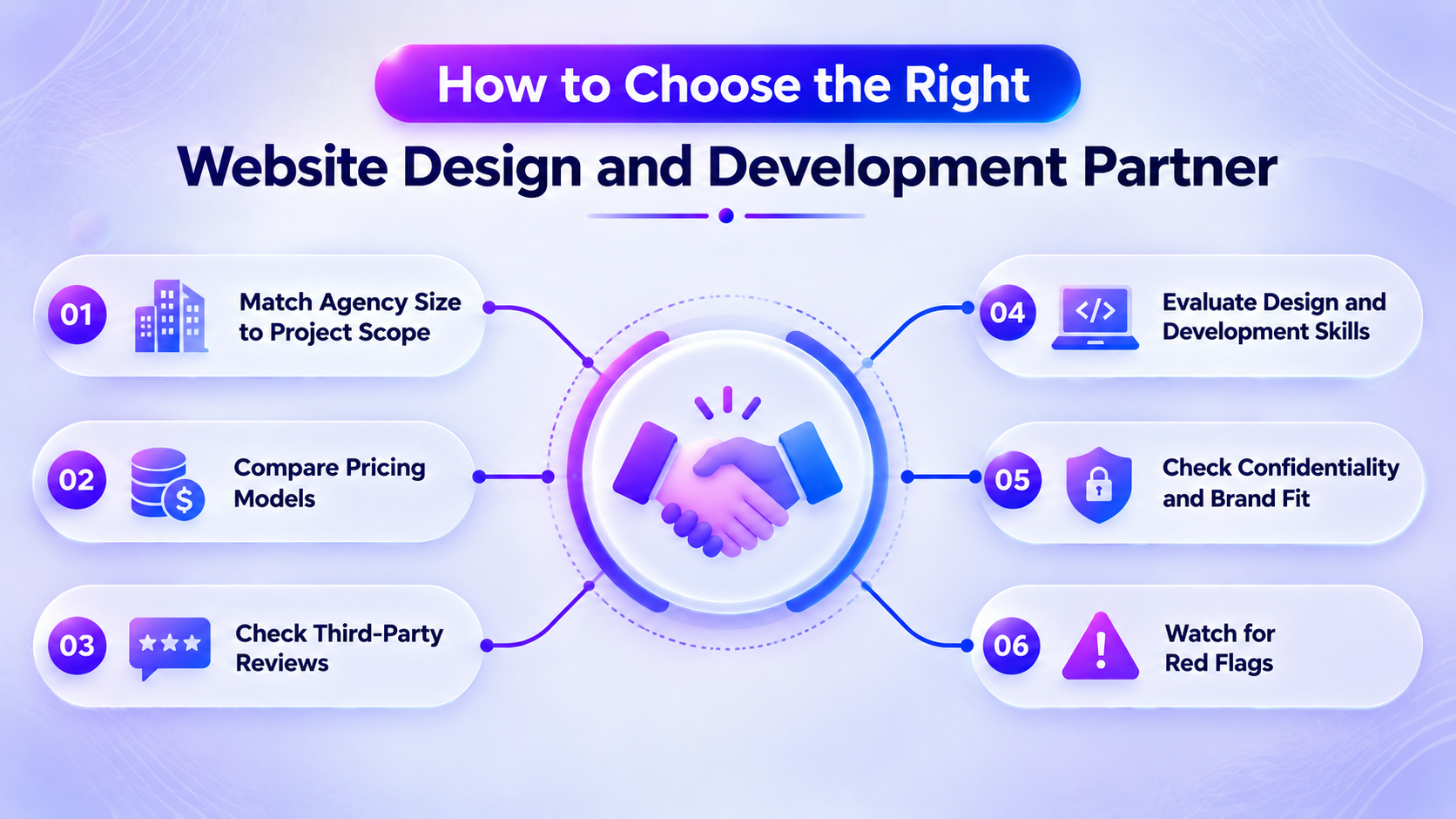
Choose a website design and development partner by matching their size and specialty to your project scope, not by picking whoever pitches the loudest.
A five-person startup and a national retail chain need very different things from a design partner, and the wrong match usually shows up halfway through the build. A few practical filters help narrow the list fast and save you a costly mismatch later.
- Match agency size to project scope. Large studios excel at enterprise transformation, while smaller, focused teams often move faster and cost less for startup-sized projects.
- Compare pricing models. Fixed-scope pricing suits projects with a clear spec. Dedicated team or hourly pricing suits ongoing work, like an offshore development team supporting a growing product.
- Check third-party reviews. Clutch and GoodFirms show verified client feedback, which tells you more than testimonials picked for an agency’s own site.
- Confirm they handle both design and development well. Some agencies quietly outsource one side of the work, which adds a hidden layer of risk that only shows up once something breaks.
Agencies evaluating a white-label partner should also ask about confidentiality and how a team fits their existing brand, since friction there shows up in every single client handoff going forward.
A few red flags matter just as much as the checklist above. Walk away from any agency that won’t show real client work, that dodges questions about who will actually build your site, or that quotes a price so low it doesn’t cover basic quality control.
A cheap website that needs a full rebuild in a year costs more than a solid one built right the first time. Trust the checklist over the sales pitch, and the right partner usually becomes obvious within a call or two.
Final Thoughts
Picking the right website design and development company comes down to matching their strengths to your actual goals, not their reputation.
Enterprise brands mid-transformation might lean toward Huge Inc. or R/GA. Startups and agencies often prefer CodersBucket for design, development, and long-term engineering support from a single team. This is especially true when SaaS, AI, or offshore development is part of the project roadmap.
Either way, the goal stays the same: a site that earns trust in the first three seconds and keeps it long after launch. Review the case studies, ask sharp questions, and get in touch with the team that fits your goals best.
Frequently Asked Questions
What is the difference between a website design company and a development company?
A website design company focuses on visual layout and user experience, while a development company focuses on the technical build behind the site. Many businesses hire one agency that covers both, including CodersBucket, to avoid the miscommunication that happens when two vendors handle each half.
How much does it cost to hire a website design and development company?
Costs typically range from a few thousand dollars for a simple site to well over $100,000 for a complex enterprise platform. Small business sites often fall between $5,000 and $25,000, while custom SaaS or enterprise builds run much higher depending on features and timeline. Always ask what a quote actually includes before comparing two numbers side by side.
How long does it take to build a custom website?
A standard business website usually takes 6 to 10 weeks, while a custom SaaS product or complex platform can take 3 to 6 months or longer. Timeline depends on scope, integrations, and how fast a client provides feedback during the build. Projects with a clear spec from day one tend to move noticeably faster.
What should a startup look for in a website development partner?
Startups should look for a partner that understands speed, budget limits, and how to build for future growth without overengineering the first version. Agencies experienced in MVP and SaaS development tend to understand that balance better than generalist agencies.
Can one company handle both design and offshore development support?
Yes. Several companies combine in-house design with offshore development teams, giving clients one point of contact for both. That setup often reduces cost without sacrificing quality, since a well-managed offshore team can match in-house design and coding standards.