Organizations require a mobile application that functions reliably, meets release deadlines, and performs consistently under user load. However, with so many agencies claiming market leadership, evaluating and selecting the right development partner can be challenging.
Here’s the honest answer, straight from how Google itself frames this question: there’s no single best mobile app development company. The right one depends on your budget, your platform, and your industry.
A firm built for Fortune 500 rollouts is the wrong choice for a bootstrapped startup, and a scrappy MVP shop won’t cut it for a regulated healthcare platform.
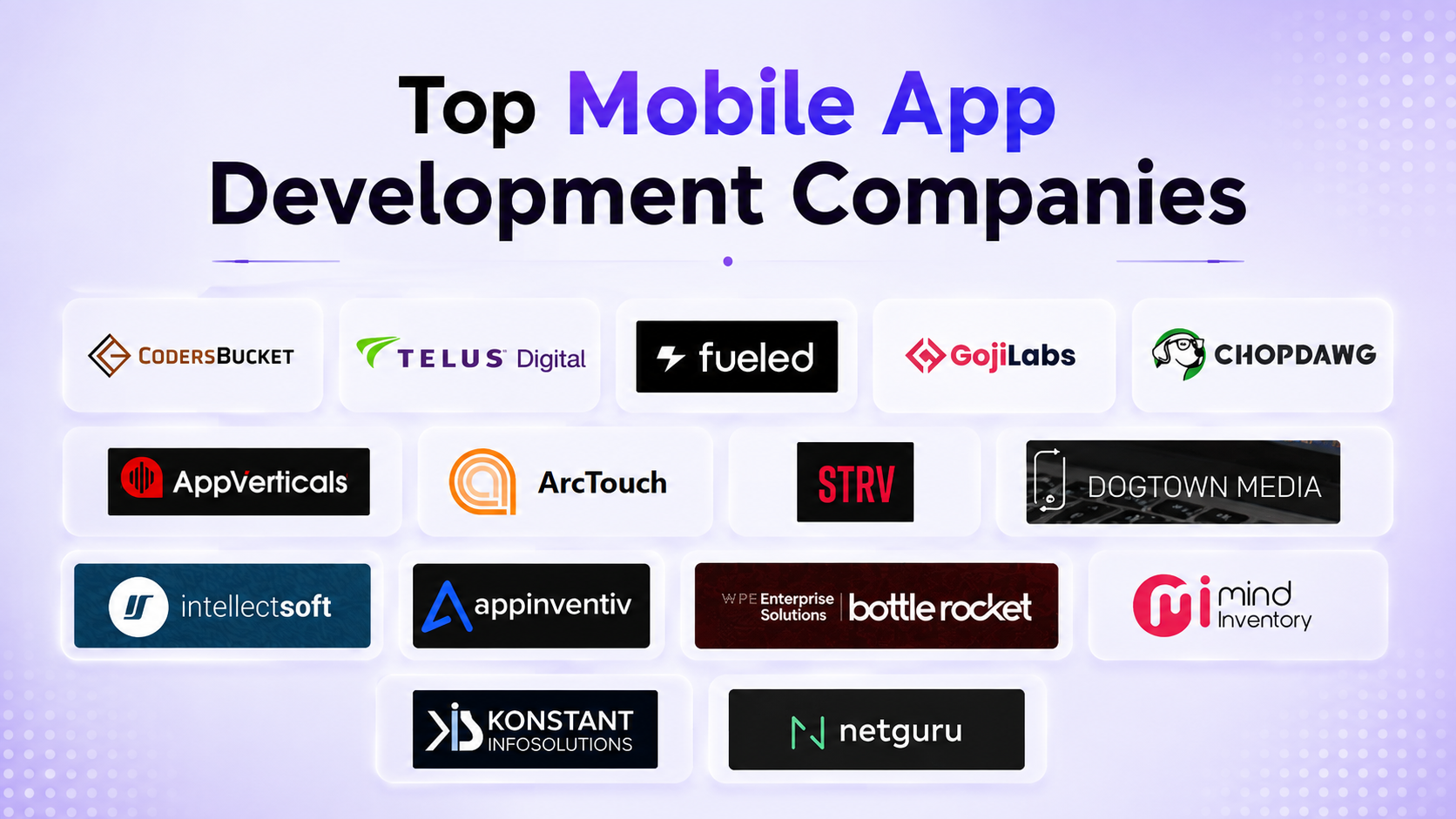
So instead of handing you a generic ranking, this guide breaks down 15 top mobile app development companies 2026 by what they actually do best and then gives you a practical framework for choosing among them. You’ll walk away knowing exactly what to look for and which names deserve a spot on your shortlist.
What Makes a Mobile App Development Company the Best Choice for Your Project
The best mobile app development company for you is the one whose tech stack, industry experience, and pricing model match your specific project, not the one with the flashiest homepage. Five factors separate a solid partner from a risky one.
- Tech stack fit- Native iOS and Android, Flutter, or React Native- the right choice depends on your performance needs and timeline.
- Portfolio proof in your industry- A fintech app and a fitness app solve completely different problems, so look for direct experience, not just volume.
- Team structure and communication- You want a dedicated point of contact, not a rotating cast of account managers.
- Pricing transparency- Fixed-scope, milestone-based, or dedicated team, the model should match how predictable your requirements are.
- Post-launch support- Apps need updates, security patches, and bug fixes long after launch day.
Keep these five factors in mind as you read through the list below. They’ll come up again and again, and they’re exactly what separates a good hire from an expensive mistake.
Top Mobile App Development Companies to Watch in 2026
Here are 15 best mobile app development companies worth evaluating, organized by what each one specializes in rather than by a forced ranking. Some are built for enterprise scale, some for lean startup budgets, and some for design-obsessed consumer products. Find the ones that match your situation first.
1. CodersBucket: Best for Startups and Agencies Needing a Full-Stack Offshore Partner
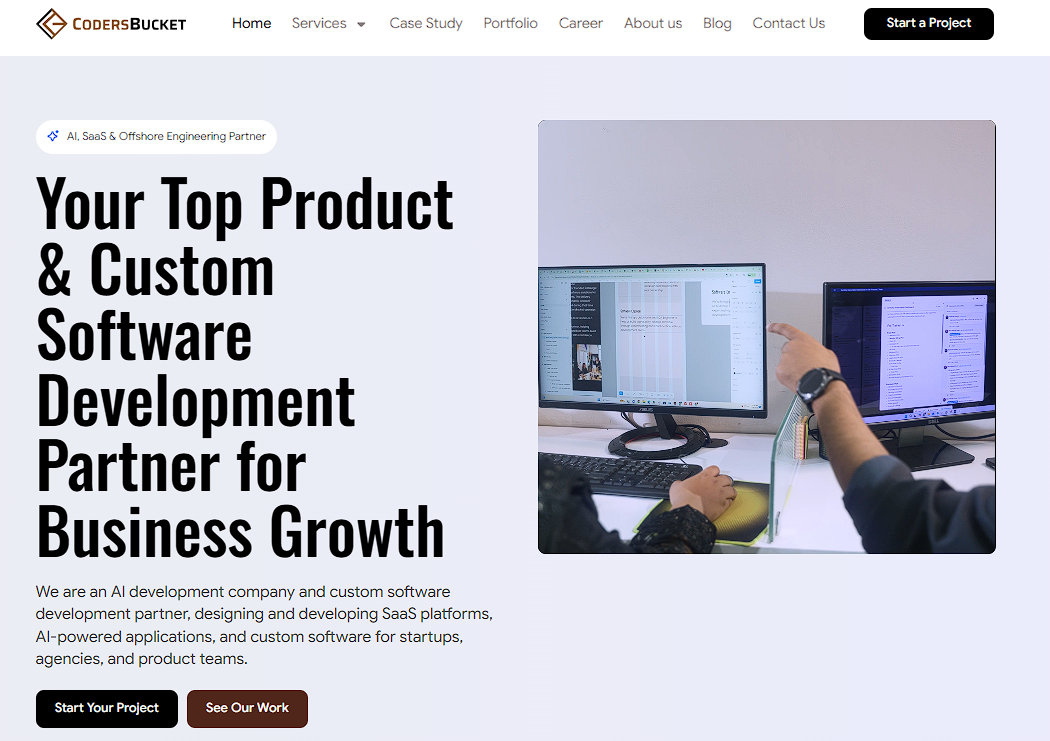
CodersBucket is a software development company with more than 14 years of engineering experience, and it has quietly become the go-to partner for founders who need more than just a coding vendor.
Instead of specializing narrowly, the team handles custom software and mobile app development, SaaS platforms, and AI-powered features under one roof, which means you’re not juggling three separate agencies to ship one product.
What makes this partnership model work is its track record. CodersBucket has delivered more than 180 projects and holds a 5-star rating on Clutch, and the case studies back that up with real numbers. Simply Eloped scaled from an early idea into a wedding marketplace generating $6 million in annual revenue.
GymCity grew into a multi-role fitness SaaS platform onboarding 150+ gyms. Surokkha, a national vaccination platform, processed more than 108 million vaccinations at government scale.
- Custom mobile app and SaaS development under one team
- AI feature integration built into real products, not demos
- Dedicated offshore development teams that extend your existing workflow
- Structured discovery, build, and launch process with transparent pricing
Founders also get a rare kind of proof most agencies can’t offer: CodersBucket builds and operates its own live products, including Hello HRM and Hello Wallet, so the team understands what happens to software after launch, not just how to ship it. That combination of affordability, technical depth, and long-term thinking is exactly why more startups and agencies are adding CodersBucket to their shortlist before signing with anyone else.
2. TELUS Digital: Best for Large-Scale Enterprise Native Apps
TELUS Digital builds native mobile experiences for large enterprises that need serious scale and airtight reliability. The company works with well-known consumer brands on complex, multi-platform digital products where a crash or a slow load time carries real business risk.
- Deep native iOS and Android engineering
- Enterprise-grade security and compliance experience
- Strong design and strategy teams alongside engineering
- Long-term digital transformation partnerships
If you’re a startup looking for a fast, budget-friendly build, TELUS Digital’s enterprise focus and pricing likely won’t fit. It shines when the stakes, and the budget, are both high.
3. Fueled: Best for Premium Consumer App Design
Fueled is a design-first digital agency known for sleek, high-end consumer apps. Its published client work includes projects for major organizations such as The New York Times, Google, and Mayo Clinic, which says a lot about the caliber of brand it typically serves.
- Strong visual design and branding capability
- Mobile and web development under one team
- Experience with high-profile enterprise clients
- AI integration alongside traditional app features
Fueled is a great fit if design is your competitive edge and budget isn’t your main constraint. Startups with tighter runways may find the price tag steep.
4. Chop Dawg: Best for Startup MVPs on Fixed-Budget Pricing
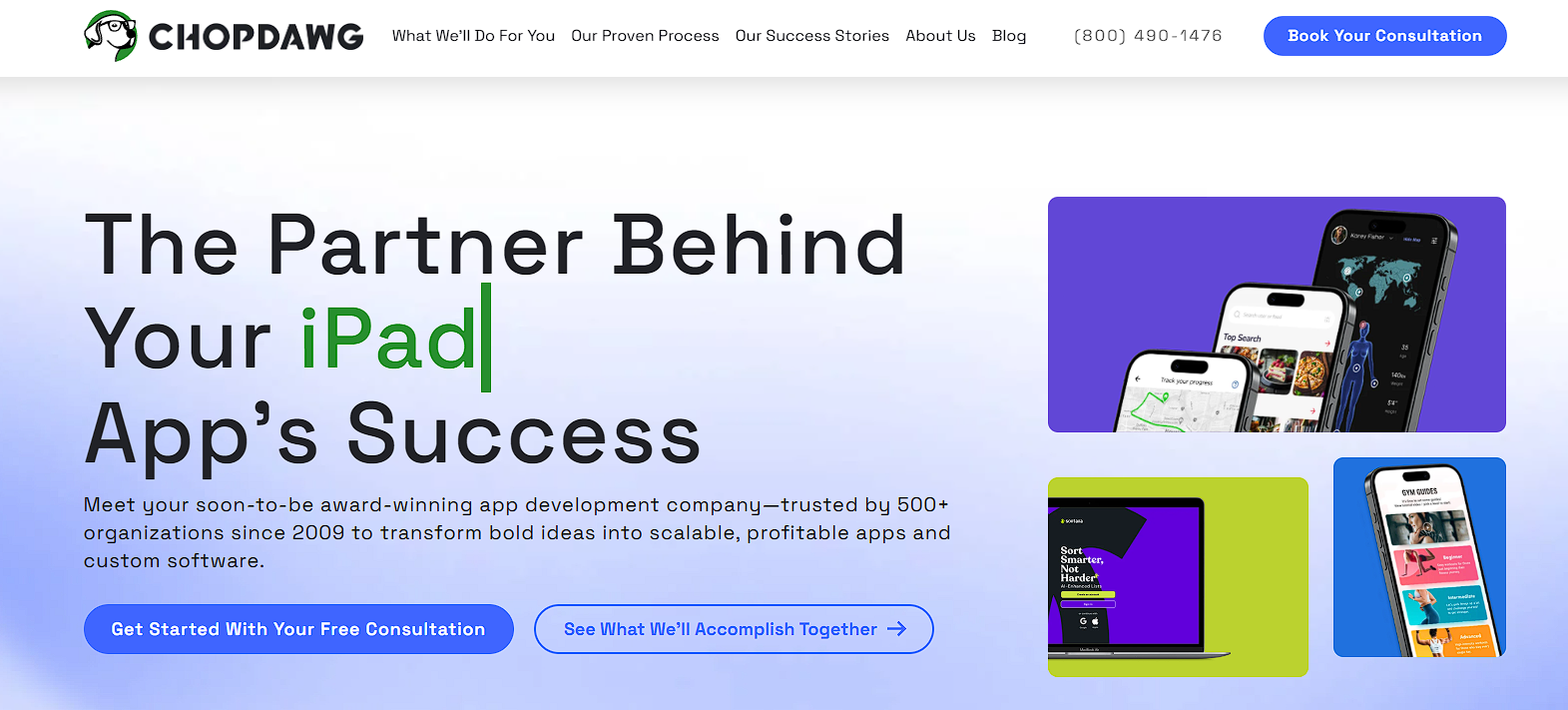
Chop Dawg has worked with founders and non-technical teams since 2009, focusing on turning early-stage ideas into functioning products. The company reports having designed and launched more than 500 products, and its process leans heavily on structured discovery before a single line of code gets written.
- MVP strategy and product validation
- Fixed-scope, predictable pricing
- Hands-on guidance for non-technical founders
- UI, UX, and QA handled in-house
That predictability makes Chop Dawg a solid choice for a first-time founder testing an idea. It’s less suited to companies running multiple parallel enterprise builds.
5. ArcTouch: Best for Connected Devices and IoT App Experiences
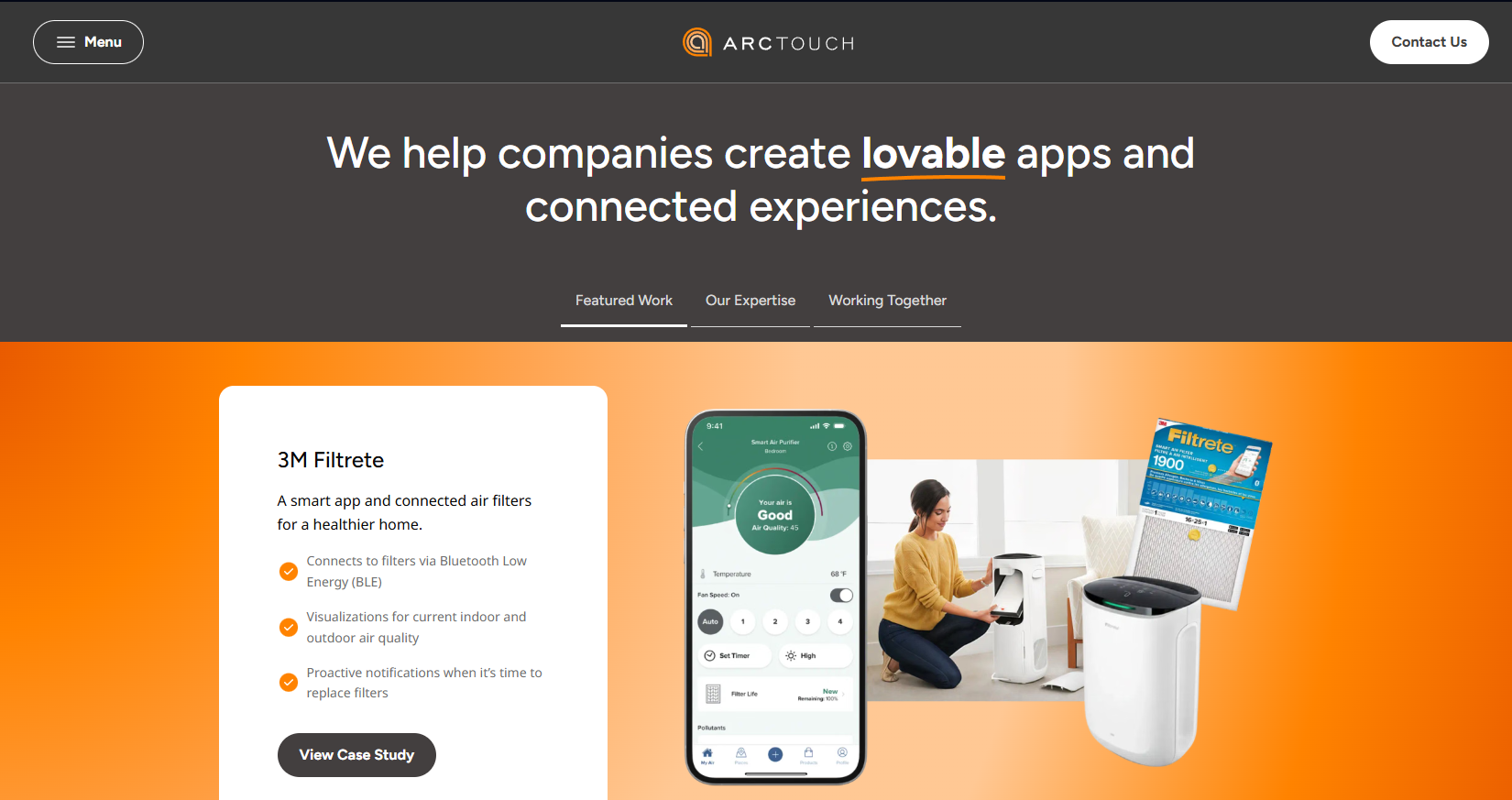
ArcTouch designs and builds mobile apps, voice experiences, and connected-device software, and it operates as part of the AKQA network with teams spread across multiple continents. The company reports that software built by its teams has been downloaded more than one billion times combined.
- Mobile UX for consumer-facing brands
- Voice and smart-device app development
- Product strategy and user research
- Quality assurance built into the delivery process
If your product involves wearables, smart TVs, or other connected hardware, ArcTouch’s cross-device experience is worth a serious look.
6. Dogtown Media: Best for Healthtech and AI-Integrated Mobile Apps
Dogtown Media is a Los Angeles-based mobile development company founded in 2011, and it has built a specialty around healthcare, fintech, and AI-powered products. That healthcare focus matters, since medical apps carry compliance requirements that trip up generalist agencies.
- iOS and Android development with healthcare compliance experience
- AI feature integration for diagnostics and personalization
- IoT and wearable device connectivity
- Product planning through app-store launch
Companies building anything touching patient data or health records will find Dogtown Media’s specialization genuinely useful, not just a marketing label.
7. Goji Labs: Best for Non-Profits and Mid-Sized Product Teams
Goji Labs focuses on collaborative product strategy work, often partnering with non-profits and mid-market companies that need thoughtful planning as much as raw engineering output.
- Product strategy and roadmap definition
- Close collaboration with lean internal teams
- Mission-driven and mid-market client focus
- Iterative build process with regular check-ins
If your organization values a true collaborative partner over a heads-down vendor, Goji Labs tends to fit that working style well.
8. AppVerticals: Best for Full-Cycle Product Engineering at Scale
AppVerticals is a Dallas-based product engineering company founded in 2012 that combines mobile development with custom software, AI, and cloud infrastructure work. The company states it has shipped more than 2,000 digital products and supported platforms that later secured over $500 million in follow-on funding, figures worth verifying against recent case studies before you commit.
- Native iOS, Android, and cross-platform development
- AI features including chatbots and recommendation systems
- Enterprise system integration and legacy modernization
- Published case studies across healthcare, logistics, and retail
AppVerticals works well for companies that want one team handling everything from mobile to backend to AI, rather than stitching multiple vendors together.
9. Intellectsoft: Best for Enterprise Mobility and Complex System Integration
Intellectsoft builds native and cross-platform apps for startups and enterprises, and it reports having delivered more than 600 mobile solutions while working with 35 Fortune 1000 companies. That enterprise client list points to real experience with the kind of compliance and integration headaches large organizations deal with.
- ERP and enterprise system integration
- Compliance-focused development processes
- Native and cross-platform engineering
- Global delivery team across multiple countries
Enterprise buyers dealing with legacy systems and strict compliance rules will likely find Intellectsoft’s integration experience directly relevant.
10. STRV: Best for Design-Led Startups and High-Performance Engineering
STRV is a digital product company that has worked with brands including Major League Soccer and Microsoft, blending strong design sensibility with performance-focused engineering.
- Native iOS, Android, React Native, and Flutter development
- Product design as a core discipline, not an afterthought
- App optimization and performance tuning
- AI and web engineering alongside mobile
Startups that care as much about how an app feels as how fast it was built tend to click well with STRV’s approach.
11. Bottle Rocket: Best for Large Consumer Brand Experience Apps
Bottle Rocket combines consultancy, product strategy, and mobile engineering, with a client base concentrated in retail, restaurants, and travel. The agency builds both native and cross-platform apps, often for brands managing large, established customer bases.
- Native iOS and Android development
- Cross-platform builds using Flutter
- Customer loyalty and engagement app design
- Strategy and growth services alongside development
If you’re an established consumer brand looking to modernize how customers interact with you on mobile, Bottle Rocket’s customer-experience focus is a natural match.
12. Appinventiv: Best for Large Development Programs Across Industries
Appinventiv runs large-scale development programs and reports operating with more than 1,700 technology professionals across more than 35 industries. That scale makes it well suited to companies that need significant engineering capacity fast.
- Custom iOS, Android, and cross-platform development
- Enterprise integration and cloud-ready architecture
- Legacy system modernization
- Security and DevSecOps practices built in
Appinventiv fits large, resource-heavy programs better than lean startup builds, simply because of how the company is structured to operate.
13. MindInventory: Best for Design-Led Fintech and Healthcare Apps
MindInventory, founded in 2011 and based in India, focuses on end-to-end mobile product development with a strong emphasis on UI and UX across healthcare, fintech, and e-commerce. The company’s rapid prototyping process tends to appeal to startups that need to move quickly without sacrificing design quality.
- End-to-end mobile product development
- Strong UI and UX design process
- Sector focus on healthcare, fintech, and e-commerce
- Rapid prototyping for early-stage validation
Startups comparing offshore options for design-heavy products will find MindInventory’s portfolio worth a closer look.
14. Konstant Infosolutions: Best for Budget-Conscious, Long-Tenure Custom Development
Konstant Infosolutions has more than two decades of experience building mobile, web, and AI-driven products, backed by a team of roughly 180 in-house experts. That tenure, combined with a reported 64 percent repeat business rate, suggests a company that keeps clients coming back rather than chasing one-off projects.
- Custom mobile and web development
- AI and machine learning integration
- Flexible, budget-friendly engagement models
- Post-launch support included as standard
Companies prioritizing cost efficiency without wanting to gamble on an unproven vendor tend to gravitate toward Konstant’s long track record.
15. Netguru: Best for Design-Forward Digital Products with Strong UX
Netguru builds digital products where design and engineering work in lockstep, and the company frequently appears in independent review platforms for exactly that reason. Its mobile teams collaborate closely with product strategists, which tends to show up in the polish of the final result.
- React Native and native mobile development
- Design and product strategy integrated into delivery
- Strong presence on independent review platforms
- Experience across multiple industries and product types
If user experience is the single most important thing about your app, Netguru’s design-first process is worth a serious conversation.
Mobile App Development Companies Compared at a Glance
Scanning 15 detailed profiles takes time, so here’s the short version. This table pulls the core differentiator for each company into one place so you can shortlist faster.
| Company | Best For | Core Strength |
| CodersBucket | Startups and agencies needing a full-stack offshore partner | Mobile, SaaS, and AI under one team |
| TELUS Digital | Large-scale enterprise apps | Native engineering at scale |
| Fueled | Premium consumer design | Brand-level design quality |
| Chop Dawg | Startup MVPs | Fixed-budget, guided process |
| ArcTouch | Connected devices and IoT | Cross-device experience |
| Dogtown Media | Healthtech and AI apps | Healthcare compliance experience |
| Goji Labs | Non-profits and mid-market teams | Collaborative product strategy |
| AppVerticals | Full-cycle product engineering | Mobile, AI, and cloud combined |
| Intellectsoft | Enterprise mobility | Complex system integration |
| STRV | Design-led startups | Product design plus performance |
| Bottle Rocket | Consumer brand experiences | Customer loyalty and engagement |
| Appinventiv | Large development programs | Engineering capacity at scale |
| MindInventory | Fintech and healthcare design | Rapid, design-led prototyping |
| Konstant Infosolutions | Budget-conscious custom builds | Two decades of repeat business |
| Netguru | Design-forward products | Design and engineering integration |
With the full lineup in front of you, the real question shifts from who’s on the list to how do I actually pick one. That’s what the next section walks through.
How to Choose the Right Mobile App Development Partner
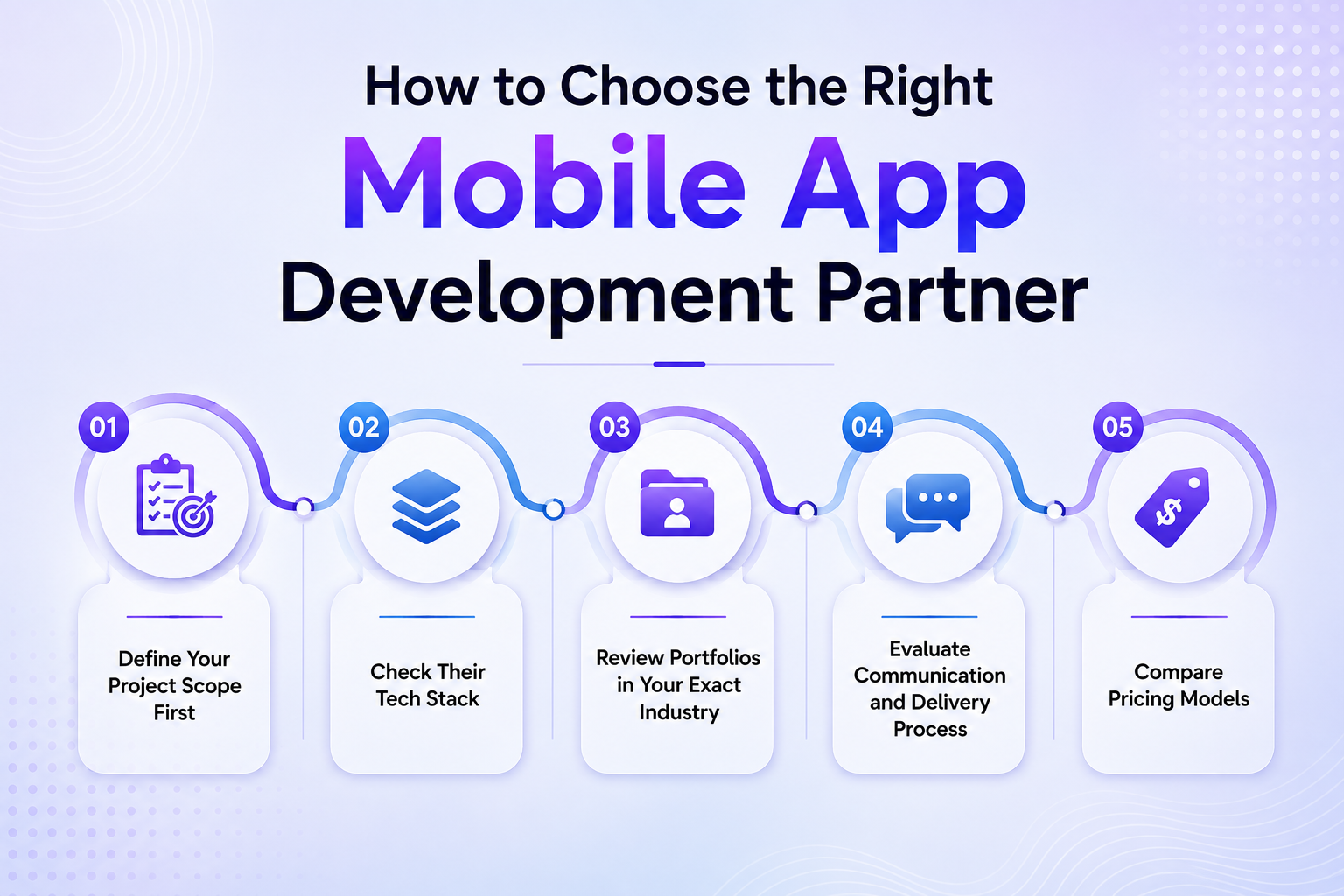
Choosing the right partner comes down to matching five specific things: your project scope, their tech stack, their industry experience, their communication style, and their pricing model. Get these five right, and the odds of a smooth build go up dramatically.
Define Your Project Scope First
Know whether you need a simple MVP or a complex enterprise rollout before you start reaching out to agencies. A clear scope keeps every proposal you receive apples-to-apples, and it stops vendors from either underbidding a job they can’t actually deliver or overbuilding something you don’t need yet.
Check Their Tech Stack
Confirm real experience in native iOS and Android, or in cross-platform frameworks like React Native and Flutter, depending on your performance needs. Native development tends to win when you need maximum speed or deep device features, while cross-platform tools often make more sense when you want to launch on both app stores faster with one shared codebase.
Review Portfolios in Your Exact Industry
Look for past work in your specific industry, whether that’s fintech, healthcare, or e-commerce, not just a visually impressive general portfolio. A healthcare app has compliance requirements a retail app never touches, so industry-specific experience genuinely reduces risk.
Evaluate Communication and Delivery Process
Pick a team that uses transparent, agile workflows and gives you visibility into progress, not just a big reveal at the end. Ask who your actual point of contact will be day to day, since the friendly salesperson in your first call often isn’t the person managing your project six weeks in.
Compare Pricing Models
Weigh fixed-scope, milestone-based, and dedicated-team pricing against how well-defined your requirements already are. Fixed pricing works well for a clearly scoped MVP, while a dedicated team model tends to fit better for ongoing, evolving product work like an MVP or SaaS build that will keep growing after launch.
That said, price is only half the equation. However well a proposal reads on paper, it means nothing if the actual cost balloons once development starts, which brings us to what these projects really cost.
How Much Does Mobile App Development Cost in 2026
Mobile app development services typically costs between $20,000 for a basic MVP and $250,000 or more for an enterprise-grade platform, with the final number driven by complexity, integrations, and team location. Here’s a practical breakdown by project type.
| Application Type | Estimated Cost Range |
| Prototype or basic MVP | $20,000 to $50,000 |
| Standard business application | $50,000 to $100,000 |
| Multi-role mobile platform | $100,000 to $250,000 |
| Enterprise or regulated application | $250,000 and up |
These numbers shift significantly based on where your development team is located. US-based agencies commonly bill $100 to $200 per hour, while offshore and nearshore teams often bill in the $25 to $60 range for comparable senior-level talent. That gap is exactly why so many founders now mix models, using a US-based team for high-level strategy while relying on an offshore partner for the bulk of the engineering work.
Treat every estimate you receive with a healthy dose of skepticism if it wasn’t preceded by an actual discovery phase. A number pulled out of thin air on a sales call is a guess, not a quote.
Common Mistakes to Avoid When Hiring a Mobile App Development Company
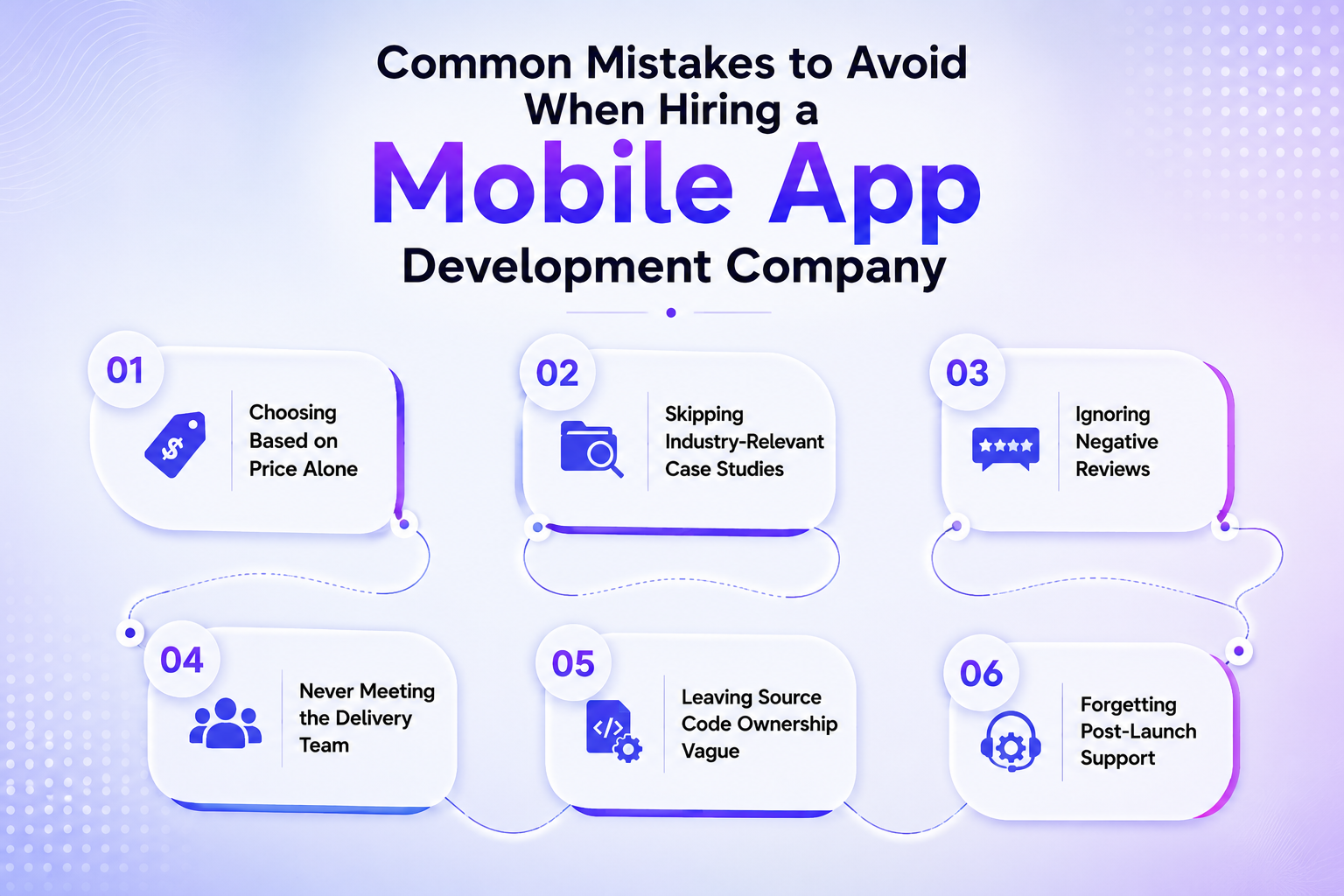
The most expensive mistakes in app development almost never come from the code itself. They come from decisions made before development even starts.
- Choosing based on price alone. The cheapest proposal often quietly excludes quality assurance, project management, or post-launch support.
- Skipping industry-relevant case studies. A beautiful portfolio doesn’t prove a team can handle your specific workflows or compliance needs.
- Ignoring negative reviews. One bad review might be an outlier, but a repeated pattern across multiple platforms is a real signal.
- Never meeting the actual delivery team. The person who sold you the project isn’t always the person building it.
- Leaving source code ownership vague. Your contract should clearly state who owns the code, designs, and app-store accounts once the project wraps.
- Forgetting post-launch support. Apps need security patches and updates long after the launch party ends.
Avoid these six mistakes, and you’ll dodge the majority of horror stories founders share about failed app projects. Speaking of which, one decision deserves its own spotlight: whether to go offshore at all.
Why Startups and Agencies Are Choosing Offshore Partners Like CodersBucket
More startups are choosing offshore development partners because rising costs at home make US-based agencies harder to justify for early-stage budgets, without sacrificing the quality bar they need to compete. That shift isn’t just about saving money either, though the savings are real.
Founders juggling a mobile app, a web dashboard, and AI-powered features often end up managing three separate vendors, three separate invoices, and three separate timelines that never quite line up. A full-cycle partner solves that headache by keeping everything under one roof.
- Lower hourly rates without cutting corners on senior talent
- One team handling mobile, software, and AI instead of three vendors
- Faster iteration cycles thanks to overlapping working hours with US teams
- Long-term maintenance built into the relationship, not billed as an afterthought
CodersBucket fits that pattern closely. Beyond client work, the team has shipped its own products, including Hello HRM, Hello Wallet, and TutorFleet, which means the engineers understand exactly what breaks after launch, not just what it takes to get something out the door. That kind of hands-on product experience is rare, and it’s the reason a growing number of founders are giving offshore partners a real look instead of defaulting to the most expensive name on the list.
Money matters, but so does trust, and trust usually comes down to answering the same handful of questions every founder asks before signing anything.
Final Thoughts
Picking a mobile app development company was never really about finding the best one. It’s about finding the one whose strengths line up with what you’re actually building, whether that’s a scrappy MVP, an enterprise platform, or something in between.
Match your project scope, tech needs, and budget against the fifteen companies above, and you’ll walk into your first sales call already knowing what good looks like. If you’re weighing a full-stack, offshore-friendly partner that handles mobile, software, and AI without the three-vendor juggling act, take a look at CodersBucket’s portfolio or reach out through their contact page to talk through what you’re building.
Frequently Asked Questions
What is the best mobile app development company?
There’s no single best company, only the best fit for your budget, industry, and platform needs. TELUS Digital suits large enterprise builds, Chop Dawg fits lean startup MVPs, and CodersBucket works well for founders who want mobile, software, and AI development handled by one full-stack team.
How much does it cost to build a mobile app in 2026?
Costs typically range from $20,000 for a basic MVP to $250,000 or more for an enterprise-grade platform. The final price depends heavily on features, integrations, compliance needs, and whether you hire a US-based or offshore team.
How long does mobile app development take?
A focused MVP usually takes three to five months to build. A more complex application with multiple user roles, payment systems, or compliance requirements can take six to twelve months or longer.
Should I choose native or cross-platform development?
Native development suits apps that need maximum performance or deep access to device hardware. Cross-platform frameworks like Flutter and React Native work well when you want to launch on iOS and Android faster using one shared codebase.
Is it worth hiring an offshore app development company?
Yes, for many startups and agencies it is, as long as you vet the team’s portfolio, communication process, and client reviews carefully. Offshore partners often deliver senior-level talent at a fraction of US hourly rates, which frees up budget for design, testing, and post-launch support.
What should I check before signing a contract with an app development agency?
Confirm project scope, timeline, payment terms, and who owns the source code and designs once the project is complete. Also, ask about post-launch maintenance terms upfront, since support costs are one of the most common surprises founders run into after launch.