The right product design company depends on your product, your team, and your timeline. No single agency fits every project.
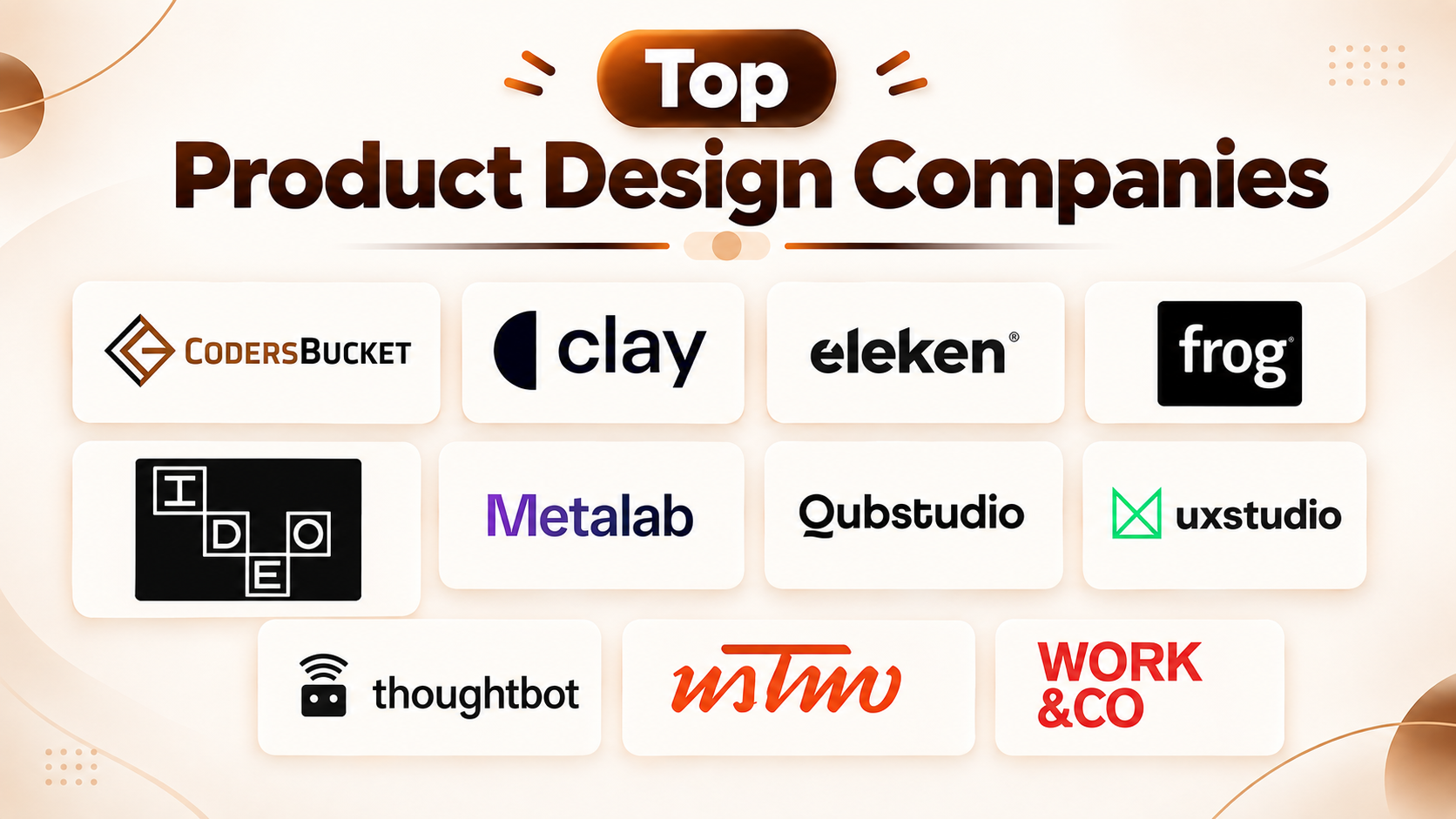
You’ll find 11 top product design companies compared here, side by side. Some focus on SaaS interfaces. Others handle enterprise systems, mobile apps, or research heavy discovery work.
Take Clay, thoughtbot, and Work & Co as three quick examples. Clay blends product UX with brand and design systems.
At thoughtbot, design work pairs closely with engineering. Work & Co has shipped commerce apps for brands like IKEA.
Below is a comparison table, then the selection method, then full profiles for all 11 agencies. After that comes cost, process, and hiring advice. That way, you can plan the whole engagement, not just pick a name.
Top Product Design Companies At A Glance
These 11 companies cover different digital product design needs, from SaaS dashboards to banking apps to enterprise systems. Scan the table first, then read the fit label next to each name.
Fit labels are editorial calls, not a performance ranking. CodersBucket, which publishes this guide, leads the table below. The other ten follow alphabetically.
| Company | Best fit | Relevant services | Official work example | Pricing evidence | Question to confirm |
| CodersBucket | Software and DevOps build for SaaS and AI products | Custom software, SaaS, AI apps, DevOps | Surokkha, Bangladesh’s vaccination platform | Quote based, not published | How is UX work handled on the build side? |
| Clay | Product UX plus brand and design systems | UX/UI, strategy, design systems, branding | Digital product and branding portfolio | $50,000+ minimum, per Clutch | Is marketing site work priced separately? |
| Eleken | Ongoing SaaS UX/UI capacity | SaaS product design, dedicated designers | SaaS and MVP redesign work | $4,599 to $11,999 a month | How do pause and cancel terms work? |
| frog | Broader product and service innovation | Design strategy across digital and physical | Multi industry design portfolio | Quote based, not published | Is the assigned team digital only? |
| IDEO | Research and early product direction | Research, prototyping, digital and industrial design | FEMSA and OXXO digital ecosystem | Quote based, not published | Does scope include production design? |
| Metalab | Digital interfaces and product identity | UI/UX, branding, interaction design | Early Slack app and brand work | Quote based, not published | Who is on the team today? |
| Qubstudio | Complex product UX, including banking | UX/UI, accessibility, scaling design | Gulf Bank and ila bank | $10,000+ minimum, per Clutch | How deep is developer support? |
| thoughtbot | Design tied closely to engineering | Product design, research, development | Healthcare, finance, insurance work | Quote based, not published | How is design staffed versus engineering? |
| ustwo | Discovery through launch, human centered | UX research, design, engineering | RVO Health and Mavie projects | Quote based, not published | What support continues after launch? |
| UX studio | Research led B2B SaaS design | UX research, UI design, development | Legal, insurance, healthcare, SaaS work | $10,000+ minimum, per Clutch | How much research access will you get? |
| Work & Co | Enterprise commerce and connected products | Product design, engineering, strategy | IKEA commerce app and ecosystem | Quote based, not published | How does team availability scale? |
Next up: how this shortlist got built.
How Were These Product Design Companies Selected?
Public evidence decided this independent shortlist, not private testing or a scored ranking. The review looked at official service pages and public case studies, dated September 2026.
Every company needed two things to qualify. First, an official design or engineering offering. Second, public proof of relevant work, through a case study or a detailed portfolio page.
Six checks shaped the fit label for each company. These cover product fit, research depth, deliverables, engineering collaboration, commercial clarity, and case evidence.
No agency was hired, tested, or interviewed for this piece. No proposals were collected, and no exhaustive scan was run against every design firm on the market.
One more thing worth stating plainly. CodersBucket, which publishes this guide, is included using the same six checks as the other ten companies. It did not get a softer review because it’s the publisher.
Headquarters, founding years, and minimum budgets come from company sites and Clutch listings. Prices, team names, and portfolio links change fast in this industry.
Confirm anything here directly with the company before you sign a contract. With the ground rules set, the 11 profiles come next.
Which Product Design Companies Should You Consider?
Eleven companies made this list. CodersBucket, which publishes this guide, leads it, and the other ten follow alphabetically.
Every profile follows the same layout: a short overview, key work evidence, and a company snapshot. The snapshot covers headquarters, founding year, services, fit, pricing, Clutch status, and one question to confirm.
CodersBucket
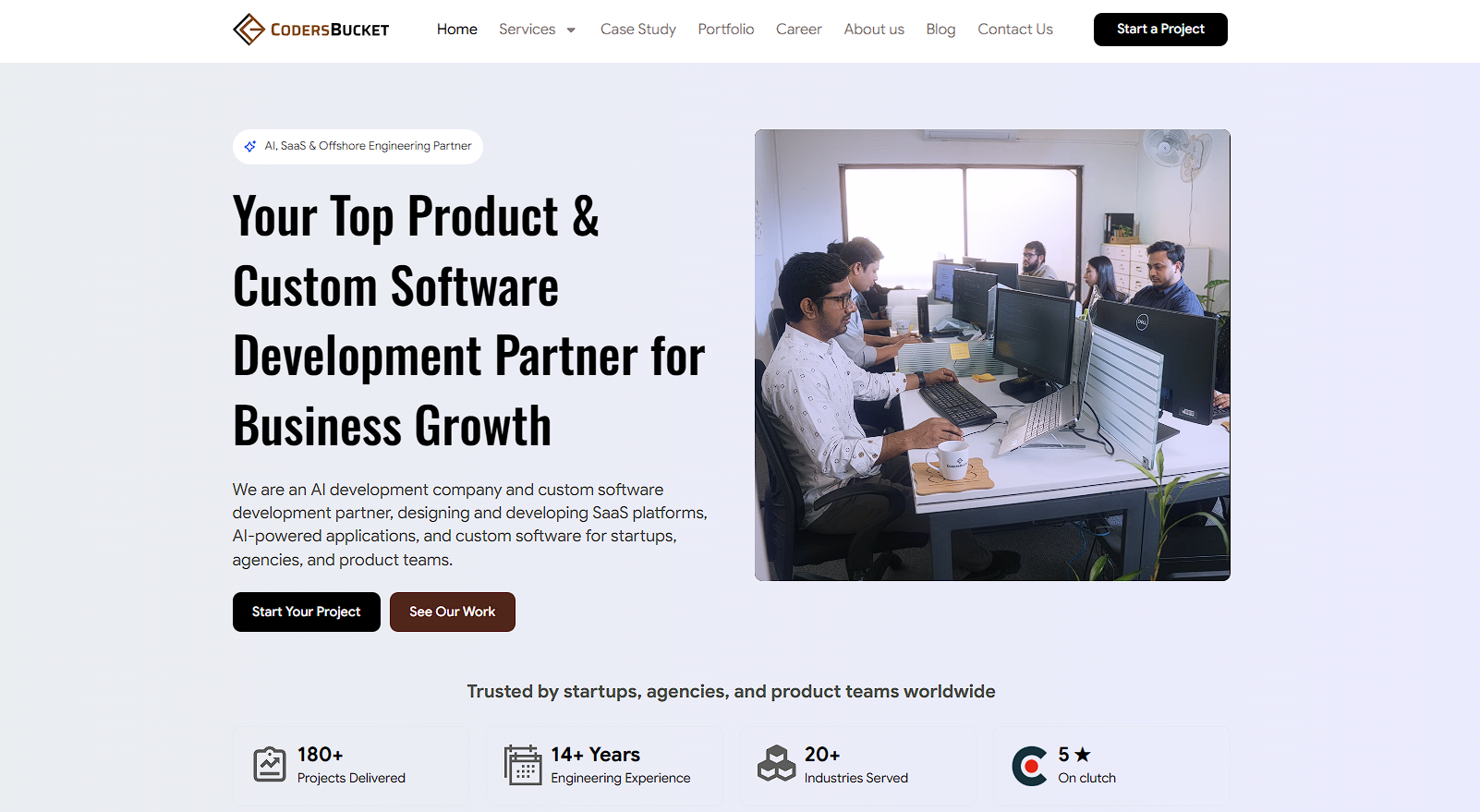
CodersBucket is a Dhaka based software company that builds custom software, SaaS platforms, and AI powered applications. It suits teams that need a product built and shipped by one accountable engineering team.
The company folds CI/CD, staged deployments, and DevOps directly into each build. Cloud infrastructure and monitoring come with the product, not as a separate service. So you work with one team instead of juggling vendors.
CodersBucket has contributed engineering work to Surokkha, Bangladesh’s national vaccination platform. The company reports the platform processed more than 108 million vaccinations. It also reports more than 180 delivered projects since 2012.
Its stack covers AWS, Docker, Kubernetes, Jenkins, Terraform, Node.js, React, Next.js, Python, PostgreSQL, and MongoDB. The senior team serves clients worldwide from Dhaka, Monday to Friday. Browse the portfolio to see recent builds.
- Headquarters: Dhaka, Bangladesh
- Founded: 2012
- Core services: Custom software, SaaS and MVP builds, mobile apps, AI applications, DevOps
- Best for: Turning product and design decisions into production software
- Featured work: Engineering contribution to Surokkha, Bangladesh’s national vaccination platform
- Pricing: Not published. Request a scoped quote.
- Clutch rating: 5.0, as reported by CodersBucket
- Website: codersbucket.com
- Question to confirm: How UX and design decisions get handled before the build starts
Clay
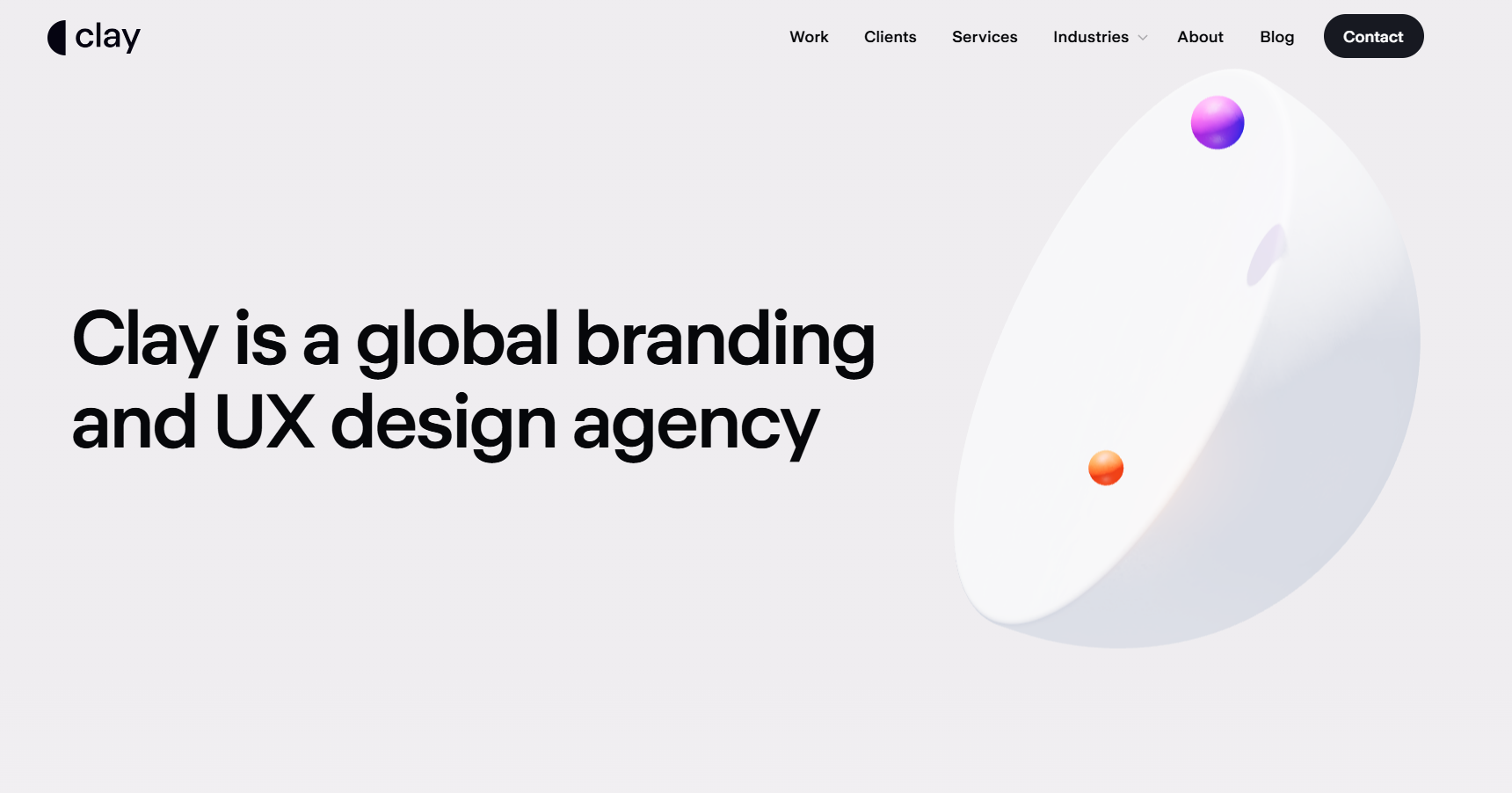
Clay is a San Francisco UI/UX and branding agency. It suits teams that want product UX, brand, and design systems handled together.
Its services page lists UX/UI, strategy, design systems, and branding as one offering. The portfolio mixes digital products with brand projects. Match a case to your own scope before you reach out.
- Headquarters: San Francisco, California, USA
- Founded: 2009, per its Clutch listing
- Core services: UX/UI, product and brand strategy, design systems, branding, web development
- Best for: Product UX combined with brand and design systems
- Featured work: Digital product and branding portfolio
- Pricing: Clutch lists a $50,000 minimum project and $150 to $199 an hour
- Clutch rating: Listed on Clutch. Check the live profile for the current score.
- Website: clay.global
- Question to confirm: Whether marketing site work is priced apart from product work
Eleken
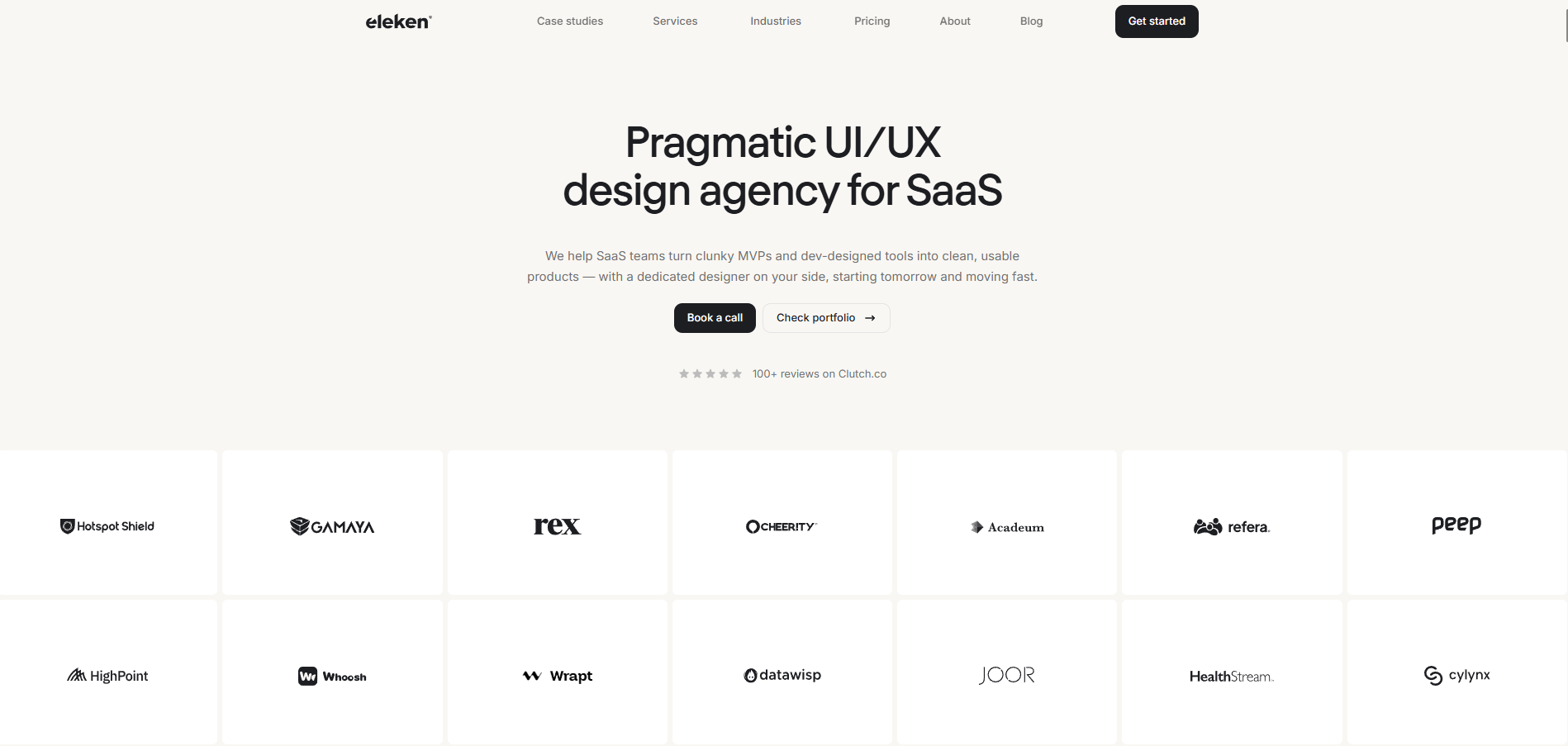
Eleken is a SaaS focused UI/UX design agency based in Kyiv, Ukraine. It suits teams that want ongoing design capacity instead of a one off project.
Eleken works on a subscription model with dedicated designers. Its site shows MVP redesigns and SaaS workflow examples. Verify a case close to your product before you commit.
- Headquarters: Kyiv, Ukraine
- Founded: 2015, per its Clutch listing
- Core services: SaaS product design, UI/UX, UX audits, web and mobile app design
- Best for: Ongoing SaaS UX/UI capacity
- Featured work: MVP redesign and SaaS workflow cases
- Pricing: Monthly plans run $4,599 part time, $6,599 full time, and $11,999 for two designers. A two month minimum applies.
- Clutch rating: Listed on Clutch. Check the live profile for the current score.
- Website: eleken.co
- Question to confirm: How pause and cancel terms interact with the two month minimum
Frog
Frog is a global design and innovation firm, founded in Germany in 1969. It suits teams that need product and service innovation beyond interface work.
The firm works across physical, digital, and spatial experiences. Its product and service design page covers that full range. Because the scope is broad, confirm a specifically digital case before you shortlist.
- Headquarters: San Francisco, California, USA
- Founded: 1969
- Core services: Product and service design, design strategy, innovation consulting
- Best for: Broader product and service innovation
- Featured work: Multi industry digital and physical design portfolio
- Pricing: Not published. Request a scoped quote.
- Clutch rating: Not verified for this review
- Website: frog.co
- Question to confirm: Which digital product team would staff your project
IDEO
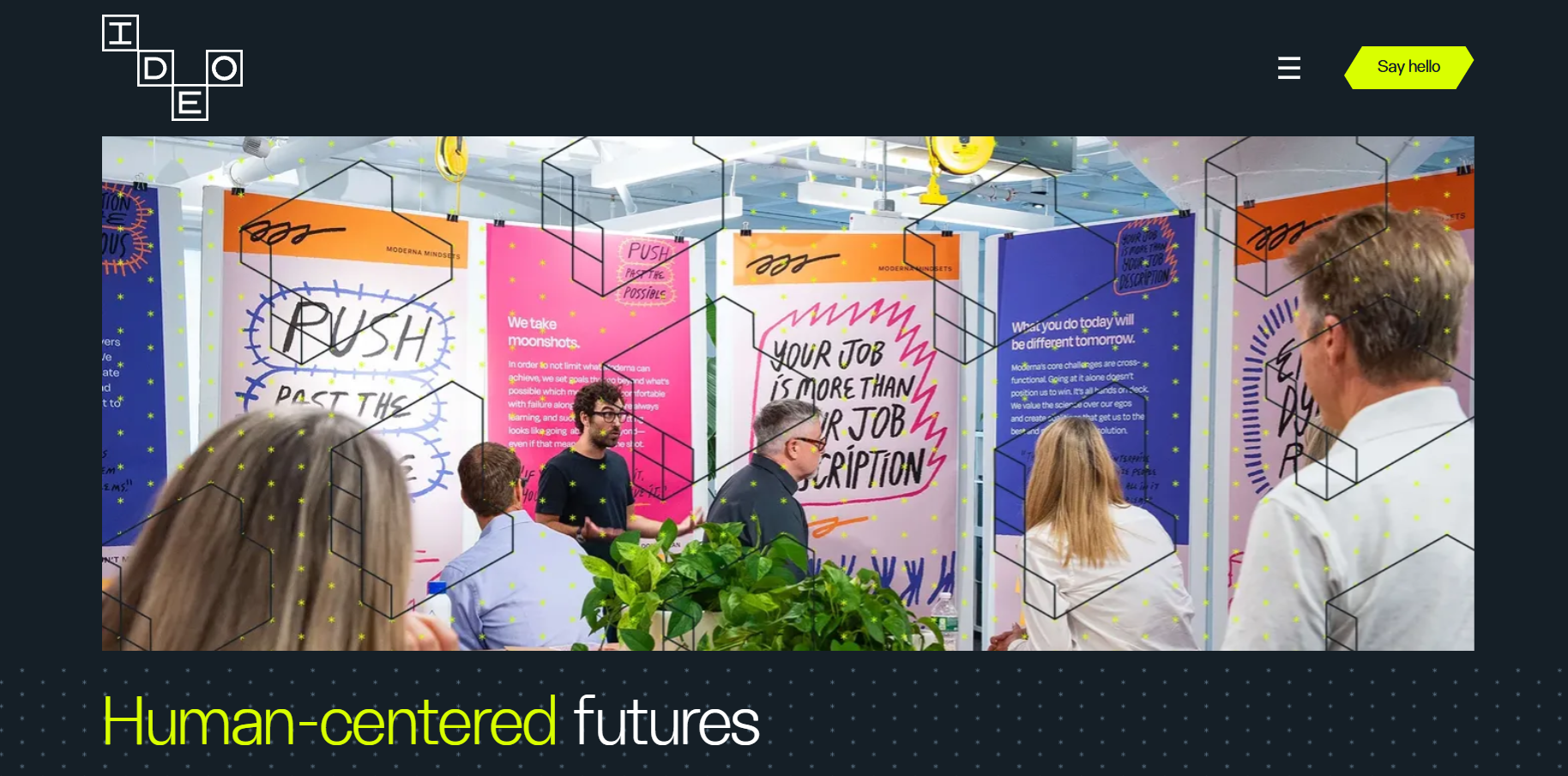
IDEO is a global design firm founded in California in 1991. It suits teams that need research and early product direction.
Its design services span research, rapid prototyping, digital product design, and industrial design. The FEMSA and OXXO digital ecosystem appears among its linked examples. Confirm IDEO’s exact role before you assume full delivery.
- Headquarters: Palo Alto, California, USA
- Founded: 1991
- Core services: Research, rapid prototyping, digital product design, industrial design
- Best for: Research and early product direction
- Featured work: FEMSA and OXXO digital ecosystem
- Pricing: Not published. Request a scoped quote.
- Clutch rating: Not verified for this review
- Website: ideo.com
- Question to confirm: Whether the work ends at validated concepts or continues into production design
Metalab
Metalab is an interface design studio based in Victoria, Canada. It suits teams that want strong digital interfaces tied to product identity.
Its work page shows digital products alongside brand projects. The best known example is the original Slack product and brand. Treat that as a historical project, not a current client reference.
- Headquarters: Victoria, British Columbia, Canada
- Founded: 2006
- Core services: UI/UX design, product branding, interaction design
- Best for: Digital interfaces and product identity
- Featured work: Early Slack product suite, mobile app, and brand
- Pricing: Not published. Request a scoped quote.
- Clutch rating: Not verified for this review
- Website: metalab.com
- Question to confirm: Who is on the current delivery team for projects like yours
Qubstudio
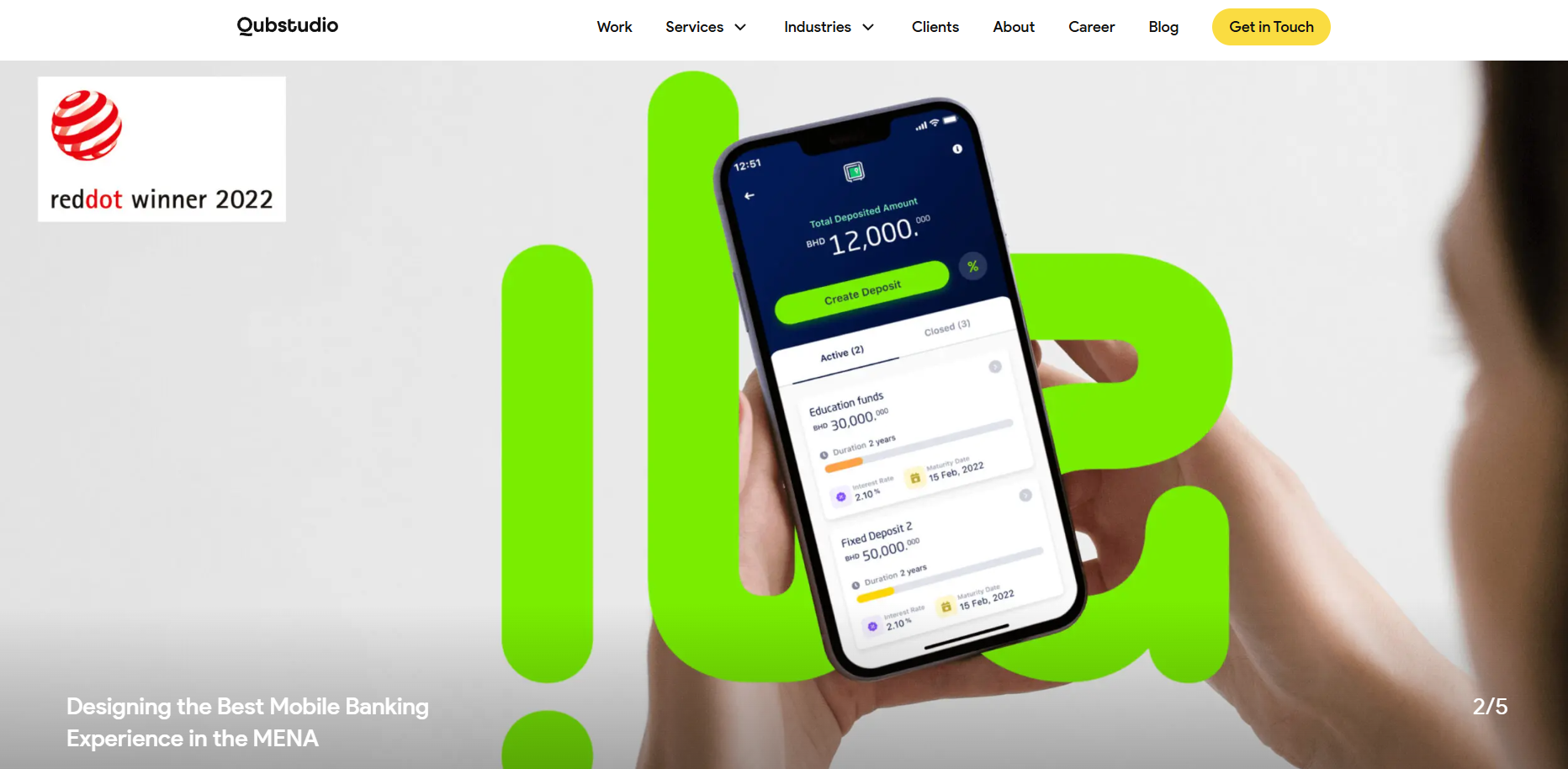
Qubstudio is a digital product design and branding agency based in Lviv, Ukraine. It suits teams building complex product UX, including banking.
Its UX design services focus on consistency and scaling across touchpoints. Gulf Bank and ila bank appear in its case studies. Open each case to confirm the actual scope.
- Headquarters: Lviv, Ukraine
- Founded: 2007, per the company
- Core services: UX/UI design, product redesign, design systems, branding
- Best for: Complex product UX, including banking
- Featured work: Gulf Bank and ila bank
- Pricing: Clutch lists a $10,000 minimum project and $50 to $99 an hour
- Clutch rating: Listed on Clutch. Check the live profile for the current score.
- Website: qubstudio.com
- Question to confirm: How thorough the accessibility evaluation and developer support are
Thoughtbot
Thoughtbot is a product design and development consultancy founded in Boston in 2003. It suits teams that want design tied closely to software delivery.
Its product design practice combines research and design with engineering. The wider services page adds product validation and team augmentation. Sector experience spans healthcare, finance, and insurance.
- Headquarters: Boston, Massachusetts, USA, with a largely remote team
- Founded: 2003
- Core services: Product research, product design, web and mobile development, team augmentation
- Best for: Design closely connected to software delivery
- Featured work: Healthcare, finance, and insurance products
- Pricing: Not published. Request a scoped quote.
- Clutch rating: Not verified for this review
- Website: thoughtbot.com
- Question to confirm: How design and engineering staffing split across the project
Ustwo
Ustwo is a digital product studio founded in London in 2004. It suits teams that want one partner from discovery through launch.
The studio runs cross functional design and development teams built around human centered design. Its work index includes health and consumer projects such as RVO Health and Mavie.
- Headquarters: London, United Kingdom
- Founded: 2004
- Core services: Product strategy, UX research, product design, engineering
- Best for: Digital experiences from discovery to launch
- Featured work: RVO Health and Mavie
- Pricing: Not published. Request a scoped quote.
- Clutch rating: Not verified for this review
- Website: ustwo.com
- Question to confirm: What support continues after release
UX Studio
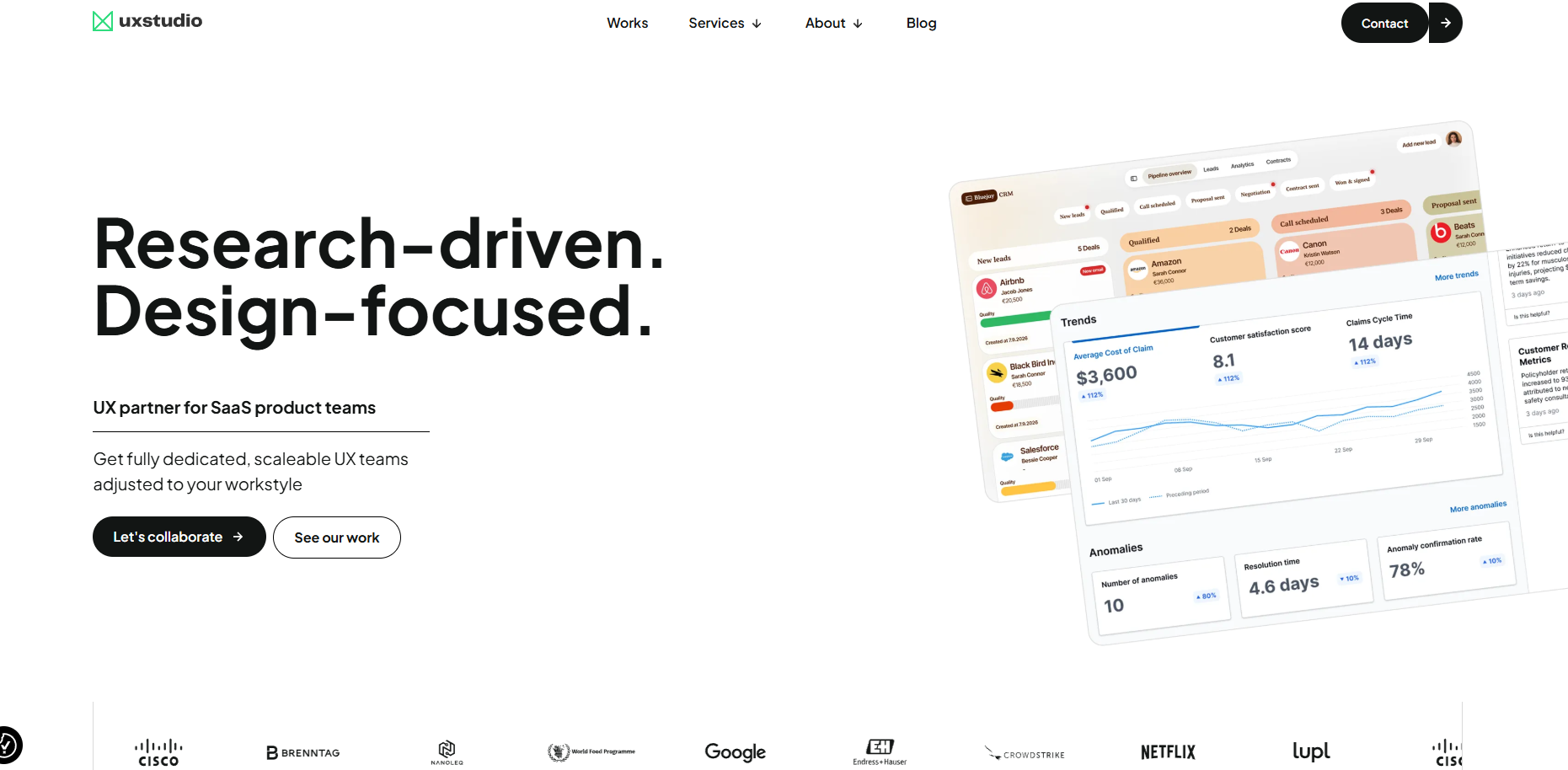
UX studio is a UX research and design agency based in Budapest, Hungary. It suits B2B SaaS teams that want research to lead the design work.
The company offers dedicated UX teams on a subscription model. Its portfolio covers legal, insurance, healthcare, and SaaS workflow projects.
- Headquarters: Budapest, Hungary
- Founded: 2013, per its Clutch listing
- Core services: UX research, UX/UI design and redesign, design systems, consultancy
- Best for: Research led B2B SaaS design teams
- Featured work: Legal, insurance, healthcare, and SaaS workflow projects
- Pricing: Clutch lists a $10,000 minimum project and $50 to $99 an hour
- Clutch rating: 5.0 from 41 reviews on Clutch, as of July 2026
- Website: uxstudioteam.com
- Question to confirm: How much researcher time and participant recruitment the plan includes
Work & Co
Work & Co is a digital product agency founded in Brooklyn, New York, in 2013. It suits enterprise teams building commerce or connected products at scale.
Its IKEA case study covers a commerce app and wider digital touchpoints. More work sits on its clients page. Work & Co joined Accenture Song in 2023.
- Headquarters: Brooklyn, New York, USA
- Founded: 2013
- Core services: Product strategy, product design, engineering, digital commerce
- Best for: Enterprise commerce and connected digital products
- Featured work: IKEA commerce app and multichannel ecosystem
- Pricing: Not published. Request a scoped quote.
- Clutch rating: Not verified for this review
- Website: work.co
- Question to confirm: Whether team availability fits a project smaller than IKEA scale
With profiles out of the way, it helps to step back. What does a product design company actually do, and where does its work end?
What Does A Product Design Company Do?
A digital product design company helps teams research, shape, test, and improve software experiences. That’s different from UI styling alone, brand identity alone, or straight software development.
Product design covers the thinking behind a screen, not just its look. UX vs UI is a common point of confusion. UX covers structure and flow, and UI covers the visual layer on top of it.
Industrial design is a separate discipline, focused on physical products. It deals with CAD files, materials, tooling, and a manufacturing handoff. None of that applies to a mobile app or a dashboard.
Some broader consultancies, like frog and IDEO, offer both digital and physical services. Classify the service you actually need before you shortlist. Keep hardware focused firms out of a purely digital comparison.
Once the category is clear, the next question is what you’re actually paying for. That’s what the services and deliverables below cover.
What Services And Deliverables Should You Expect?
A useful proposal connects each design service to a concrete deliverable, not a vague promise. Below is how the core stages map out.
| Service | Deliverable |
| Discovery | A problem brief |
| Research | Findings and a journey map |
| UX architecture | User flows and wireframes |
| UI and interaction design | Screens and a working prototype |
| Validation | Test findings and resulting changes |
| Design systems and handoff | Components, states, and specs |
Development and post launch support sit outside that table on purpose. Ask for those to be priced and scoped separately, since folding them in quietly can hide real cost.
Comparing website builds too, not just product UX? CodersBucket’s guide to website design and development companies covers that adjacent ground.
With services mapped to outputs, the next question is how to actually pick between the 11 companies above.
How Do You Choose The Right Product Design Company?
Start with your product problem, then compare companies against that same scope, not a generic list. Three checks matter most:
- Fit to your product and stage
- The strength of the evidence behind their claims
- How the team and handoff actually work
Match the agency to your product, industry and stage
Match the team to what your product needs right now. Not what it might need a year from now.
| Stage | Signal | Artifact to request |
| Pre-MVP discovery | The problem or user need is still unclear | A discovery brief with a research plan, see MVP focused build support |
| SaaS redesign | An existing product needs a UX overhaul | Before and after flow comparisons |
| Enterprise systems | Legacy tools are slowing teams down | A systems map, and see platform modernization for the build side |
| Consumer mobile apps | The app needs broad, everyday usability | A prototype tested on real devices, via mobile app development |
For domain heavy work, add a few pointed questions. Healthcare, fintech, and AI product design agency work all carry extra risk. Ask about relevant compliance experience directly, but don’t assume a certification that was never claimed.
Evaluate case studies, research and accessibility
A strong case study explains the problem, the design decisions, and the evidence behind the outcome. Ask for the agency’s exact role and the number of research participants. Also ask how many prototype iterations ran, and what measurement method they used.
Treat client logos and awards as leads worth checking, not proof on their own. For a deeper look at delivered work, check CodersBucket’s own case studies. They show how that kind of evidence should read.
Accessibility deserves its own line of questions. Ask how keyboard navigation, focus visibility, contrast, and error recovery get tested. Reference WCAG as the standard, not as a legal guarantee.
Confirm the team, collaboration and handoff
Confirm who actually does the work, and how decisions get made along the way. Ask about seniority, named roles, time zone overlap, and how often reviews happen.
Subcontractors are common in this industry, and they’re not automatically a problem. Some firms lean on a partner network for extra capacity. CodersBucket’s agency partnership and white label model shows one way that structure can stay transparent.
Ask about design file ownership, design QA, and support after launch, too. If confidential material or AI tools come up mid project, say so early. Get that covered in the proposal, not after the fact.
Selection criteria only tell half the story. Cost is the other half, and that’s next.
How Much Do Product Design Companies Charge?
Product design costs depend on scope, team capacity, and the engagement model you choose. No single industry rate applies.
Eleken is the only company here that publishes pricing on its own site. It’s a useful example, not an industry average. It charges monthly, from $4,599 for a part time designer up to $11,999 for two.
A two month minimum applies to that plan. Clutch listings add minimum project sizes for Clay, Qubstudio, and UX studio. Everyone else on this list quotes by scope.
Several factors drive cost up or down. Research recruitment adds time and fees, and more flows and states mean more design hours. Extra platforms, added complexity, more revisions, and engineering work all raise the total.
Never infer a full project cost from a monthly subscription rate alone. A $6,599 monthly plan and a fixed six month project work differently. They can land at very different totals for similar scope.
Engagement model shapes cost just as much as scope does, so that’s worth a closer look.
Which engagement model fits your project?
Choose an engagement model that matches how clearly your scope is already defined, not the other way around.
| Model | When it’s useful | Billing basis | Limitation and question to ask |
| Fixed scope | The project is clearly defined | A flat fee for set deliverables | Changes cost extra, ask how change requests get priced |
| Time and materials | Scope may shift as you learn | Hourly or daily rate | Costs are less predictable, ask for a spending cap |
| Retainer or subscription | You need ongoing UX support | A monthly fee for set capacity | Often has a minimum term, confirm the length |
| Embedded team | You want in-house feel at lower cost | A monthly fee per seat | Time zones matter, see offshore team models for how overlap gets handled |
An agency managed service and a straight staffing hire are not the same thing. Ask directly which one you’re actually buying.
What Is The Product Design Process And How Long Does It Take?
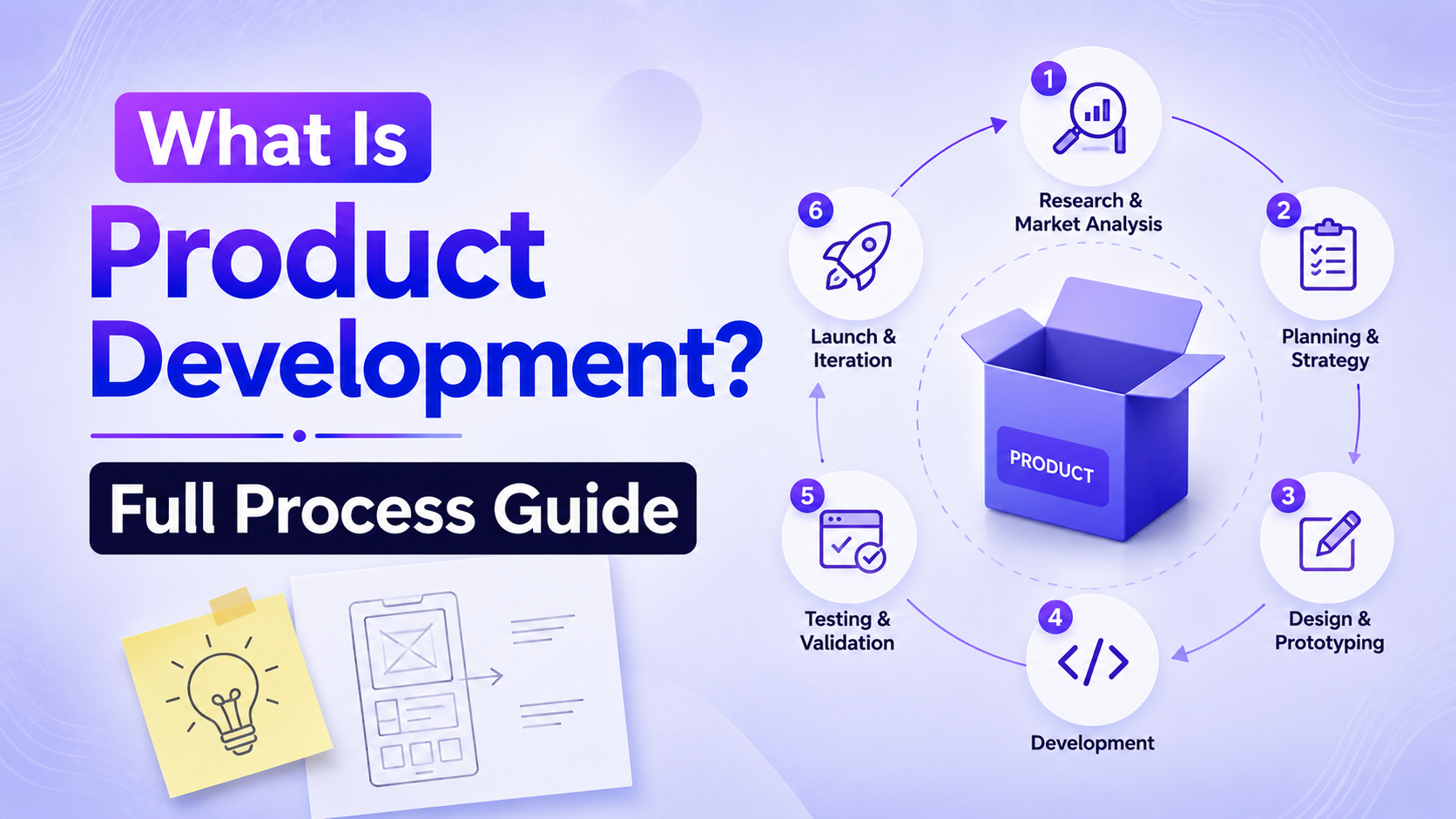
Product design usually moves through discovery, definition, design, testing, and delivery. Real iteration happens between stages, not a straight line. The Design Council’s four stage framework is a useful reference point for how that flow works.
Mapped to software, discovery becomes research and problem framing, while definition becomes prioritized flows. Design becomes wireframes and prototypes, and testing becomes usability sessions. Delivery becomes developer handoff.
Timelines depend on recruitment speed, feedback cycles, and how many workflows you’re touching. Platform count and how closely engineering stays involved matter too. Ask for milestone estimates instead of one number for the whole project.
Prototype completion and a production launch are two different finish lines. A tested prototype can be ready in weeks, while a shipped, coded product usually takes longer.
Once you know the process, the next decision is who runs it. An agency, a freelancer, or someone in house, each works differently.
Should You Hire An Agency, A Freelancer Or An In-House Designer?
The right hiring option depends on continuity, project scope, and the skills your team already has. Price alone doesn’t decide it. Below is how the three stack up.
| Option | Capacity | Context retention | Management effort | Continuity |
| Multidisciplinary agency | High, multiple specialists available | Strong at team level | Low, the agency self manages | Depends on contract length |
| Freelancer | Limited to one person’s time | High while actively engaged | Medium, needs direct oversight | Ends when the contract ends |
| In-house designer | Fixed to one hire’s capacity | Highest over time | High, you manage growth | Continuous, if retention holds |
An embedded staffing arrangement and true recruitment are different paths. Both add a person to your team, but the paths differ.
Staffing and hiring questions come up often here. CodersBucket’s notes on product development hiring work through that comparison in more depth.
No option is always cheaper or always faster. It depends on how long the work runs and how much context switching it involves.
What Should You Include In A Product Design Request For Proposal?
Give every company the same product context and the same expected outcomes, so proposals stay comparable. A solid RFP covers these points.
- The business problem and who your users are
- Product stage, current research, and key user flows
- Platforms, integrations, and accessibility targets
- Deliverables, budget band, and milestones
- Decision makers on your side
Ask each bidder to state their assumptions, exclusions, team allocation, and acceptance criteria up front. That’s what separates a comparable proposal from a vague one.
Close the RFP with a direct invitation. Ask every company to respond to the same document. That way, you’re comparing like for like, not apples to spreadsheets.
A few questions come up again and again once shortlisting starts. The FAQs below cover the most common ones.
Frequently Asked Questions
These questions address common issues when shortlisting a design partner.
Which product design company is best for a startup?
No single company is the best fit for every startup, since stage and budget vary too much. Start by validating the problem, then match scope to what you can realistically ship.
Compare a validation focused firm against a dedicated design option. Use official evidence from each, not reputation alone.
Can a product design agency also develop my app?
Yes, some agencies handle design and development together. thoughtbot and ustwo both pair product design with engineering delivery.
CodersBucket works the other way. It’s an engineering first team that builds the software once design decisions are made. Either way, confirm engineering scope and release ownership on CodersBucket’s development services page or in any agency’s proposal.
Can I work with a product design company remotely?
Yes, remote collaboration works well when communication and responsibilities are clear from day one. thoughtbot delivers much of its work remotely, which makes it a useful reference point.
Set overlap hours, a review cadence, and direct access to real users before the project starts. Don’t assume it’ll sort itself out.
Who should own the design files and design system?
Design file and system ownership needs to get agreed before the project starts, not after. List editable source files, component libraries, research artifacts, and handoff documentation as specific proposal questions.
Rights and licensing ultimately depend on the signed agreement. Treat this as a negotiation point, not an assumption.
Do product design companies also design physical products?
Some do, while digital specialists stick to software experiences only. IDEO publishes both digital and industrial services, which makes it a good example of the split.
If your project involves hardware, prototyping, or manufacturing, look elsewhere. Industrial design firms fit that work better than a purely digital shortlist.
Choose A Product Design Partner For Your Next Step
Shortlist two or three companies with evidence that actually matches your product and delivery needs. A familiar name isn’t enough on its own. Compare their proposals side by side, using the same questions you asked in the RFP.
If your priority has shifted from pure design toward getting something built and shipped, that’s a different conversation. Talk to CodersBucket about a scoped discovery call. Bring the same product context you’d give any other agency on this list.